
Life Cycle Assessment: The Complete Guide (2026)
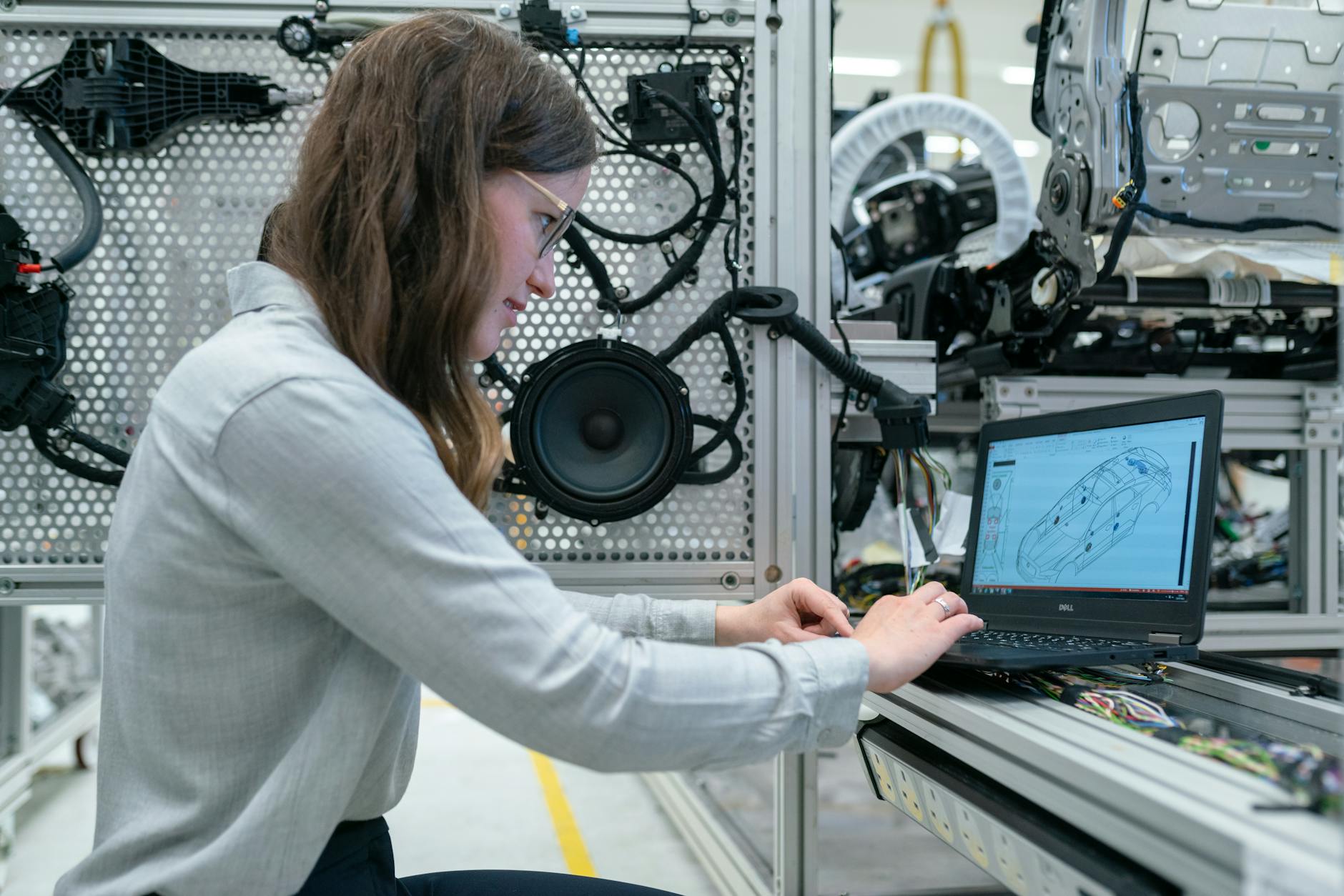
Photo by [ThisIsEngineering](https://www.pexels.com/photo/female-engineer-working-in-workshop-3862630/) on Pexels
AI-generated article. Figures and regulatory references link to primary sources.
Key Takeaways
- A life cycle assessment (LCA) evaluates a product’s environmental impact across every stage of its existence, from raw material extraction through to end of life.
- ISO 14040 and ISO 14044 set the internationally recognised methodology that makes LCA results credible, comparable, and defensible.
- A cradle-to-grave LCA covers six distinct product stages, raw materials, packaging, manufacturing, transport, use, and end of life, each with its own data requirements and modelling approach.
- Regulatory pressure in the EU, including the Empowering Consumers for the Green Transition Directive, enforceable from September 2026, means vague environmental claims are no longer acceptable.
- Across very different product categories, apparel, electronics, cosmetics, real LCA benchmarks show that impact hotspots differ dramatically, reinforcing why a product-specific approach is essential.
What Is a Life Cycle Assessment?
Life cycle assessment is a scientific method for quantifying the environmental impacts associated with a product, service, or process across its entire existence. Rather than focusing on a single stage, say, the factory gate, it follows materials and energy flows from the moment natural resources are extracted all the way through manufacturing, distribution, consumer use, and final disposal or recycling. That cradle-to-grave perspective is what makes LCA uniquely powerful: it prevents problem-shifting, the all-too-common situation where a company improves one stage of production only to inadvertently worsen another.
The methodology is governed internationally by ISO 14040 and ISO 14044, which define a four-phase process: goal and scope definition, life cycle inventory (LCI), life cycle impact assessment (LCIA), and interpretation. Together, these standards ensure that an LCA study is reproducible, transparent, and, when peer-reviewed, genuinely comparable across organisations and geographies.
If you want a deeper dive into the technical distinctions between a full LCA and a product carbon footprint, our guide on Product Carbon Footprint vs Life Cycle Assessment: What’s the Real Difference? explains where the two methodologies overlap and where they diverge.
The Four Phases of an LCA
1. Goal and Scope Definition
Before any data is gathered, the practitioner must clarify why the study is being conducted and where its boundaries lie. This includes defining the functional unit, the measurable reference point against which results will be expressed, such as “one 750 ml bottle of wine delivered to a retailer” or “one laptop used for five years.” It also means deciding the system boundary (cradle-to-grave, cradle-to-gate, or gate-to-gate) and establishing cut-off criteria: the threshold below which inputs can be excluded without materially affecting results. ISO 14044 §4.2.3.3 recommends including all materials above 1% of total product mass, though best practice is to include smaller flows when data is available.
This phase also requires defining allocation procedures, the rules for dividing environmental burdens when a process produces more than one product. The most widely used approach in LCA databases is the cut-off (100-0) model: recycled content enters the system burden-free, and waste leaving the system exits without carrying credits for its potential recycling. This avoids the complexity of modelling future recycling markets while maintaining methodological consistency.
2. Life Cycle Inventory (LCI)
This is the data collection phase. Every material input, energy flow, and emission associated with the product system is compiled into an inventory. Data quality matters enormously here, primary data from your own operations is always preferred, but background databases such as Ecoinvent (with over 21,000 unit process activities), AGRIBALYSE for food products, or DEFRA emission factors fill in upstream and downstream gaps. When multiple databases cover the same material, a hierarchical cascade ensures the most representative and highest-quality factor is selected.
3. Life Cycle Impact Assessment (LCIA)
Raw inventory data is translated into environmental impact categories. The most common is climate change, expressed as kg CO₂ equivalent using IPCC AR6 characterisation factors (GWP100). Other categories include water use, acidification, eutrophication, and resource depletion. A recognised impact method, such as ReCiPe or the EU’s EF 3.1, maps the inventory to these categories. For carbon footprint studies specifically, only the climate change category is assessed, following ISO 14067.
4. Interpretation
The findings are examined in relation to the study’s original goal. Hotspots are identified, data quality is assessed, and conclusions are drawn, including recommendations for product redesign or supplier engagement.
The Six Product Life Cycle Stages
While the ISO framework defines four methodological phases, the product system itself is typically modelled across six life cycle stages. Understanding what happens at each stage, and how it is modelled, is essential for interpreting LCA results correctly.
Stage 1: Raw Materials
This stage accounts for the extraction, processing, and upstream supply of every material in the product’s bill of materials. The emission factor for each material reflects the full burden of producing it, from mining ore to refining metal, or from growing cotton to spinning yarn. For materials sourced from outside the manufacturing country, upstream transport is added following PEFCR Guidance v6.3-2 §7.14.2: an intra-EU scenario (truck + train + barge, ~640 km total) or an extra-EU scenario (truck + container ship, ~19,000 km total). This prevents underestimating the footprint of globally sourced ingredients.
Stage 2: Packaging
All primary packaging (in direct contact with the product) and secondary packaging (outer box, shrink wrap) is included. Generic descriptions like “plastic tube” are resolved to specific polymers, PP, PET, HDPE, because emission factors differ significantly between them. Forming processes (injection moulding, blow moulding, thermoforming) are modelled separately from the raw polymer, capturing the energy consumed in shaping the packaging.
Stage 3: Manufacturing
Manufacturing covers the energy and process inputs required to transform raw materials into the finished product. This includes electricity, heat, steam, water treatment, and chemical inputs. For energy-intensive “wet processes”, textile dyeing, surface coating, chemical treatment, electricity alone may represent only 7–25% of total process emissions. A complete manufacturing model accounts for all thermal and chemical inputs, not just the electric meter reading. Electricity emission factors are country-specific: a factory in Brazil (~0.16 kg CO₂e/kWh) operates in a very different carbon context than one in India (~1.25 kg CO₂e/kWh).
Stage 4: Transport and Distribution
This stage models the journey from factory gate to point of sale. The emission factor depends on the transport mode (road, rail, sea, air) and distance. Products sold in multiple markets require a sales distribution split, for example, 60% domestic, 30% intra-EU, 10% intercontinental, with each route modelled separately.
Stage 5: Use Phase
The use phase varies dramatically by product category, and modelling it correctly requires category-specific data:
- Textiles: washing, drying, and ironing over the garment’s lifetime, following the EU PEFCR for Apparel & Footwear. A t-shirt washed 50 times at 40°C in a 3.5 kg load has a measurable energy footprint.
- Electronics: annual energy consumption (kWh/year) multiplied by expected lifetime and country-specific grid emission factor.
- Cosmetics: rinse-off products (shampoo, body wash) consume energy through water heating; leave-on products (moisturiser, serum) have a use phase impact of effectively zero.
- Food and beverages: typically zero use-phase impact (no energy consumed by the product itself).
This is why a laptop’s use phase can dominate its footprint (38% of 215 kg CO₂e), while a body cream’s use phase may be negligible.
Stage 6: End of Life
End-of-life modelling follows the cut-off approach: collection, sorting, and final disposal carry environmental burden, but the recovered fraction exits the system without credits. Recovery rates vary widely by material and region. Eurostat data for the EU27 shows:
- Paper/cardboard packaging: 94% recovery
- Rubber/tyres: 92% recovery
- Metal packaging: 79% recovery
- Plastic packaging: 77% recovery
- Glass packaging: 75% recovery
- Electronics (WEEE): 32% recovery
- Textiles: 12% recovery
These rates directly affect the split between recycling and landfill. Landfill emission factors are material-specific: paper and wood decompose anaerobically and generate significant methane, while plastics, metals, and glass are essentially inert in landfill.
Why LCA Matters More Than Ever in 2026
Sustainability discourse has moved decisively from intention to evidence. A 2020 European Commission study found that over 50% of environmental claims were vague or unfounded, and approximately 40% lacked verifiable evidence, the very reality that drove the EU Green Claims Directive proposal in the first place. Although the Commission announced its intention to withdraw that proposal in June 2025 amid concerns about administrative burden on micro-enterprises, the regulatory floor has not dropped. The Empowering Consumers for the Green Transition Directive (ECGT) is already law, banning generic environmental claims and offset-based “climate neutral” product labels from September 2026. Meanwhile, the Corporate Sustainability Reporting Directive (CSRD) requires large companies and listed SMEs to follow European Sustainability Reporting Standards, bringing a new level of scrutiny to environmental performance data.
Beyond compliance, LCA creates business value. It enables procurement teams to compare suppliers on an equal footing, guides R&D toward low-impact material substitutions, and provides the substantiated data that marketing teams need to communicate sustainability credibly, without the reputational risk of greenwashing.
What LCA Actually Reveals: Real Benchmark Data
Abstract methodology is only useful when it produces concrete numbers. Devera’s Monte Carlo LCA platform, built to ISO 14040/44, has calculated benchmarks across a wide range of consumer products. Three examples illustrate just how differently impacts can be distributed across life cycle stages.
For a t-shirt with a median footprint of 3.01 kg CO₂e, manufacturing dominates at 60.1% of total emissions, meaning fibre processing, dyeing, and wet finishing are the obvious levers for improvement. A brand trying to reduce its footprint here should prioritise production energy and chemistry, not packaging.
Flip to a laptop at 215.10 kg CO₂e and the story changes completely. The use phase accounts for 38.3%, closely followed by raw materials at 36.5%. For electronics manufacturers, extending product lifetime and improving energy efficiency in use are just as important as selecting lower-impact components.
A body cream sits in a third pattern: raw materials drive 47.7% of its 2.50 kg CO₂e footprint, with manufacturing adding 24.1% and packaging contributing 17.1%. Cosmetics brands trying to substantiate a sustainability claim need to look hard at their ingredient supply chains, not just their bottle design. This aligns with what our packaging impact deep dive argues: packaging is significant, but rarely the largest lever.
These are not hypothetical scenarios. They are the kind of insight that a rigorous life cycle assessment delivers, and the kind of evidence that regulators, retailers, and increasingly consumers are beginning to demand.
Common LCA Scope Choices Explained
One of the first decisions in any LCA is choosing the system boundary. The terminology matters, because not all studies are equivalent:
- Cradle-to-grave covers the full life cycle, from raw material extraction through end-of-life. This is the most comprehensive approach and the one required for most regulatory and comparative claims.
- Cradle-to-gate stops at the factory gate, excluding distribution, use, and disposal. Useful for supplier benchmarking, but incomplete for product-level claims.
- Gate-to-gate examines only a single manufacturing process. Appropriate for internal process optimisation but not suitable for external environmental claims.
- Cradle-to-cradle extends the analysis to include material recovery and recycling loops, particularly relevant in circular economy contexts.
Choosing the wrong scope, or an overly narrow one, is one of the most common mistakes in LCA practice. Our Essential Guide for Calculating the Carbon Footprint of Products covers these decisions in practical detail.
LCA and the Regulatory Landscape
The connections between LCA and regulation are tightening on multiple fronts. The CSRD requires large companies and listed SMEs to disclose environmental data following the European Sustainability Reporting Standards (ESRS), creating a demand for credible, auditable product-level data. The EU’s Digital Product Passport, expected to roll out gradually between 2026 and 2030, will require detailed environmental information for products, data that can only come from a systematic life cycle perspective. And the Carbon Border Adjustment Mechanism (CBAM), fully active from 2026 for sectors including steel, aluminium, and cement, effectively prices carbon-intensive imports into the EU.
The underlying logic across all of these frameworks is the same: companies need to know, and prove, the environmental footprint of what they make and sell. That is the function life cycle assessment was designed to perform.
How to Get Started with LCA
Getting started does not require a team of specialists and a six-month timeline, though complex systems may justify that investment. The process is well-defined:
- Define your goal clearly. Is this for internal improvement, a supplier scorecard, a product label, or regulatory compliance? The purpose shapes every subsequent decision.
- Set the functional unit and system boundary. Be specific. “One 750 ml bottle of wine” is a functional unit. “Our wine range” is not.
- Gather your data. Primary data from your own operations is always preferable. Secondary data from background databases (such as Ecoinvent) fills in upstream and downstream gaps. Pay attention to data quality: the confidence level of each emission factor, from exact database match to proxy estimation, directly affects the reliability of results.
- Choose an impact method. For EU regulatory purposes, the Product Environmental Footprint (PEF) methodology and EF 3.1 characterisation factors are the reference framework. For carbon footprint specifically, IPCC AR6 GWP100 factors are the standard.
- Interpret and act. Identifying the hotspot is the beginning, not the end. The value of LCA lies in using the findings to guide real decisions: reformulating a product, switching a supplier, redesigning packaging, or adjusting energy procurement.
If you are evaluating platforms to support this process, our LCA Software Comparison 2025 provides a structured overview of the main tools on the market.
Start Measuring What Actually Matters
Understanding life cycle assessment at a conceptual level is valuable. Having the numbers for your own products is what creates action. If you are ready to move from theory to data, calculate your product carbon footprint with Devera’s ISO 14040/44-aligned platform, and find out exactly where your impact sits, which phase dominates, and how you compare to industry benchmarks. The first step toward a credible sustainability claim is always a credible measurement.
Frequently Asked Questions
What is a life cycle assessment and how does it differ from a carbon footprint? A life cycle assessment is a comprehensive methodology that evaluates multiple environmental impacts, including climate change, water use, acidification, and resource depletion, across all stages of a product’s life. A product carbon footprint (governed by ISO 14067) is a subset of LCA that focuses specifically on greenhouse gas emissions, expressed in kg CO₂ equivalent. Every carbon footprint calculation draws on LCA principles, but a full LCA covers a broader range of impact categories.
What are cut-off criteria and allocation in LCA? Cut-off criteria define which inputs are small enough to exclude from the study. ISO 14044 recommends including all materials above 1% of total product mass. Allocation is the method for dividing environmental burdens between co-products, for example, when a refinery produces both petrol and diesel. The most common approach is the cut-off (100-0) model, where recycled inputs enter the system burden-free and end-of-life materials exit without credits. This is the default in major databases like Ecoinvent.
How long does it take to conduct a life cycle assessment? The timeline depends on the complexity of the product and the availability of data. A streamlined, software-assisted LCA for a relatively simple consumer product can be completed in a matter of days or weeks. A full ISO-compliant study with independent critical review, covering a complex industrial system, may take several months. Modern AI-powered platforms have significantly reduced the time and cost involved for standard product categories.
When is a life cycle assessment legally required? There is no single universal requirement to conduct an LCA, but the cases where it becomes effectively mandatory are multiplying. The EU’s Empowering Consumers for the Green Transition Directive, enforceable from September 2026, prohibits unsubstantiated generic environmental claims. Making a credible, defensible claim about a product’s environmental performance, without LCA-grade evidence, will carry growing legal and reputational risk across the EU and beyond.
What databases are used in a life cycle assessment? The primary background database for most LCA studies is Ecoinvent, which contains over 21,000 unit process activities covering materials, energy, transport, and waste treatment globally. For food products, AGRIBALYSE (maintained by ADEME, France) provides emission factors for approximately 2,500 food items. The UK Government’s DEFRA conversion factors cover around 250 materials, energy carriers, and waste types. The choice of database, and the geographic specificity of the emission factor, directly affects accuracy.