
Lush Cosmetics: Sustainability, LCA and Real Carbon Data
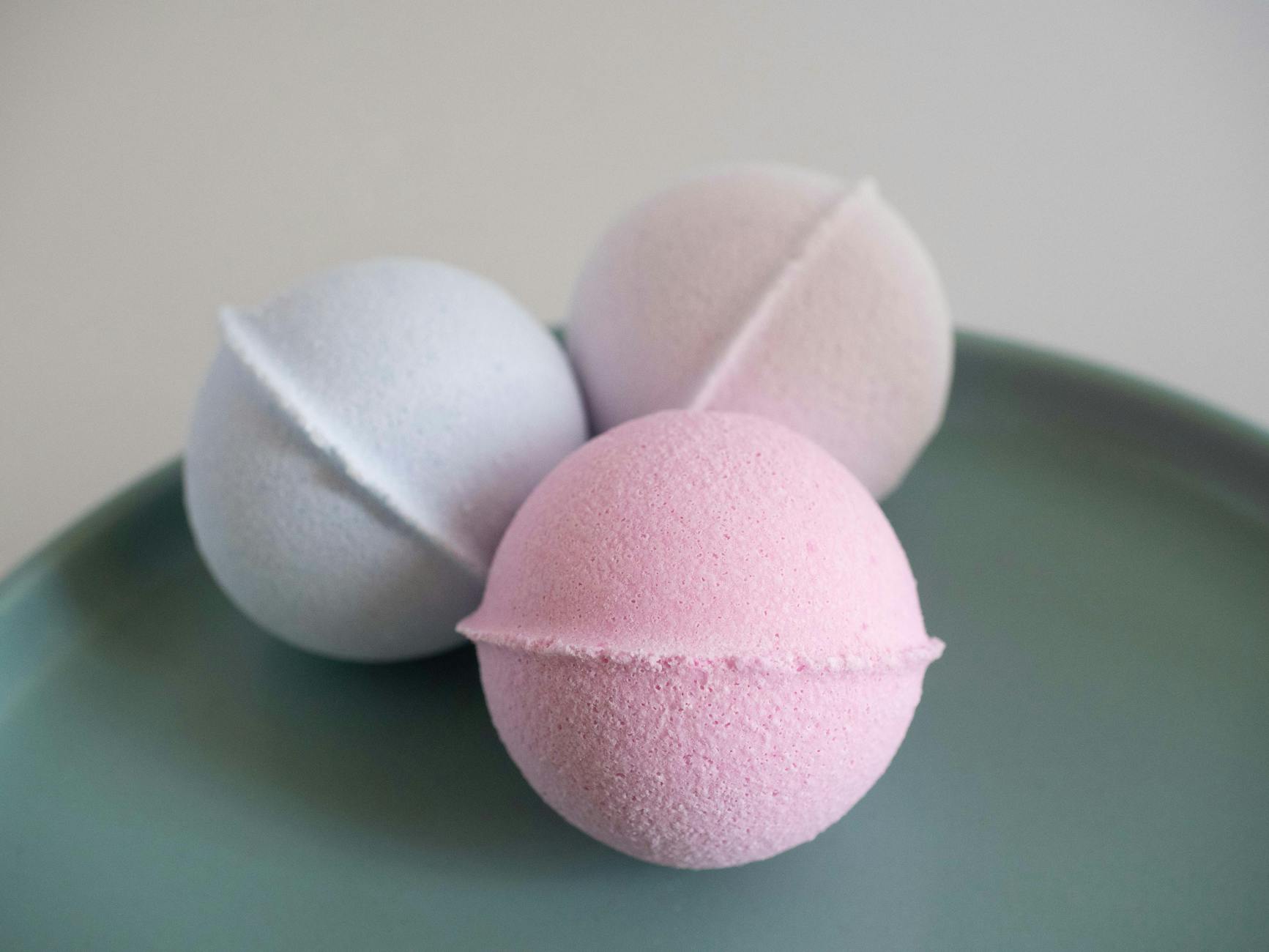
Photo by [Herbs Basics](https://www.pexels.com/photo/close-up-shot-of-bath-bombs-7924189/) on Pexels
AI-generated article. Figures and regulatory references link to primary sources.
Lush Cosmetics has spent over 30 years building a reputation that most beauty brands can only aspire to: a company that treats sustainability not as a marketing layer, but as a founding principle. According to Lush’s own audited accounts for the year ending June 2024, its total Scope 1, 2 and 3 carbon footprint reached 197,627 tCO₂e, with Scope 3 alone responsible for 93.8% of the total. That disclosed figure is exactly the kind of evidence that regulators and consumers increasingly expect. In this post we look at what Lush’s published data actually says, where independent life cycle assessment places the carbon hotspots in cosmetics, and what the rest of the beauty industry can learn about moving from sustainability storytelling to measurable proof.
Key Takeaways
- Lush’s FY24 audited accounts report a total carbon footprint of 197,627 tCO₂e, of which Scope 3 represents 93.8%. Only 6.2% sits in Scope 1 and 2 combined.
- Within Scope 3, raw materials and packaging account for 38.6% of Lush’s total emissions and customer use of products for 31.1%. Freight adds 9.6% and indirect spend 6.6%.
- Independent LCA data shows that for a typical body cream, raw materials alone drive nearly half the product’s carbon footprint. Packaging-free products only solve part of the problem.
- Lush runs 100% renewable electricity (market-based, zero emissions), has mapped over 80% of Tier 1 suppliers, and sources from around 1,000 material suppliers across 97 countries.
- For beauty brands building credible sustainability claims, product-level carbon footprints calculated under ISO 14040/44 are becoming the expected standard of proof.
What Makes Lush Cosmetics Different
When Lush opened its first shop in 1995, the founders believed cosmetics should be fresh, handmade, and rooted in environmental integrity. Over 25 years later, Lush has grown into a global brand, not just for its products but for how it has fused sustainability with brand identity, supply chain strategy, and market differentiation.
That fusion is visible in every product decision. On its Our Impact reporting, Lush states that 45% of its all-year-round products are sold naked (no packaging), and that in FY24 naked products accounted for 54% of sales volume and 32% of net sales value. The audited accounts add that nearly 18 million naked units were sold in FY24, equivalent to 64% of unit sales. Gift items are often wrapped in fabric, and where plastic is unavoidable the Bring It Back deposit return scheme facilitates a closed loop: in FY24, 2.7 million pieces of packaging were returned, with 63.5 tonnes of plastic processed at a 15% average return rate.
Many companies treat sustainability like a checkbox or cost centre. Lush treats it as a strategic differentiator. It shapes which ingredients the brand chooses, how it transports goods, and even how it engages with legislation. Lush reports running on 100% renewable electricity across all group operations, which under the market-based method contributes zero tCO₂e to its FY24 Scope 2 inventory.
Where the Carbon Actually Lives: A Life Cycle Reality Check
Lush’s naked packaging story is genuinely impressive, but life cycle assessment reveals a more complicated picture. Any cosmetics brand needs to understand it before making bold environmental claims.
Lush’s FY24 audited accounts quantify the distribution precisely. Scope 3 accounts for 93.8% of the total 197,627 tCO₂e footprint. Within Scope 3, the breakdown is:
| Scope 3 category | tCO₂e FY24 | % of total footprint |
|---|---|---|
| Raw materials and packaging | 76,266 | 38.6% |
| Customer use of products | 61,366 | 31.1% |
| Freight | 18,999 | 9.6% |
| Indirect spend | 13,016 | 6.6% |
| Business travel | 3,815 | 1.9% |
| Commuting | 3,277 | 1.7% |
| Other Scope 3 | 8,920 | 4.5% |
That distribution is striking. It tells us that all of Lush’s operational efficiency, such as renewable-powered factories, sea-freight preference, and hand-making products, accounts for only 6.2% of its total footprint (Scopes 1 and 2 combined). The other 93.8% lives in the supply chain and in customers’ bathrooms.
This aligns precisely with what independent LCA modelling reveals at the product level. According to Devera’s carbon footprint benchmark for body cream, the median carbon footprint of a single container of body cream is 2.50 kg CO₂e (ranging from 1.78 to 3.85 kg CO₂e). The phase breakdown is revealing: raw materials account for 47.7% of total emissions, manufacturing for 24.1%, and packaging for 17.1%. In other words, even if a brand eliminated packaging entirely, it would only reduce the product’s footprint by roughly one-sixth. The ingredients themselves are the dominant driver.
This is exactly the insight that Lush has publicly internalised. The company has described work on mapping over 80% of its Tier 1 suppliers and on replacing palm-derived ingredients at the feedstock level. In FY24, 1,164 tonnes of the 2,505 tonnes of palm-related feedstock used (46.5%) were palm-free.
The Packaging Problem Is Real, But Incomplete
None of this is to diminish what Lush has achieved on packaging. The Bring It Back scheme returned 2.7 million packaging pieces in FY24, and the company generated 7,464 tonnes of total waste globally in FY24 with a 63% diversion rate.
But the 17.1% packaging contribution to a body cream’s footprint, visible in Devera’s benchmark data, is a useful calibration. Packaging matters. It is not the whole story. Brands that communicate sustainability exclusively through packaging choices are, at best, telling an incomplete story and, at worst, creating the conditions for greenwashing scrutiny. The EU Green Claims Directive context is increasingly precise about requiring substantiated, lifecycle-based evidence for any environmental claim. Packaging-free alone will not pass that bar.
Ingredients: The Invisible Carbon Hotspot
Lush’s own data underlines the point. Raw materials and packaging combined account for 76,266 tCO₂e in FY24, more than any other Scope 3 category and roughly four times the freight footprint of 18,999 tCO₂e. With Lush sourcing from around 1,000 material suppliers across 97 countries and a total buying spend of £81.6m in 2024, supplier-level carbon intelligence is not a nice-to-have. It is the most impactful lever available.
Palm oil is a useful proxy for the wider ingredient challenge. A single raw material choice can cascade across deforestation rates, biodiversity loss, and upstream carbon emissions. Lush’s FY24 reporting shows a 10% reduction in palm-derived ingredients versus the prior year, and almost half of its palm-related feedstock now palm-free.
That kind of granularity is what product-level LCA enables, and what separates genuine sustainability leadership from headline-driven greenwashing.
The Shampoo Bar as a System-Level Intervention
Lush’s shampoo bar is worth examining as a case study in systems thinking rather than single-metric optimisation. A shampoo bar eliminates the plastic bottle (cutting that 17.1% packaging share), is more concentrated (reducing transport emissions), and removes the water content from the formulation (reducing manufacturing weight and waste). The result is a product that cuts emissions across multiple phases simultaneously.
Compact solid products lead to more efficient shipping and storage, reducing fuel consumption and emissions. Naked products require fewer resources to produce and transport compared to traditional packaged items.
This kind of multi-phase thinking is what sustainable cosmetics from claim to proof looks like in practice. It is not one lever. It is coordinated action across raw materials, formulation, manufacturing, and logistics.
From Storytelling to Data: The Next Frontier
Lush has been admirably transparent in publishing its audited Scope 1, 2 and 3 inventory at company level. Yet there is a frontier that even leading brands have not fully crossed: product-level carbon footprints, published per SKU, calculated under a consistent methodology. A consumer deciding between a Dream Cream and a shampoo bar still cannot easily compare the two products head to head. That is the next level of transparency the industry needs, and it is where frameworks like ISO 14040/44 and tools like automated LCA become essential.
Consider the Devera body cream benchmark again: with a median of 2.50 kg CO₂e per container and a grade threshold of A below 1.99 kg CO₂e, a brand can now set a precise, defensible target for product reformulation. That is not a narrative. It is an engineering specification. The same methodology applied to a shampoo bar versus a bottled shampoo would quantify, in CO₂e, the actual benefit of the format switch.
Greenwashing risk is real for bold brands. Any company making sustainability statements must maintain rigorous evidence behind those statements to avoid reputational backlash. Story is not enough. Data is the new credibility. Research consistently shows that consumers are willing to pay more for sustainable cosmetics, but that willingness erodes fast when claims cannot be substantiated.
What Lush Cosmetics Teaches the Industry
Lush’s publicly disclosed approach demonstrates several things that the broader beauty industry should take seriously. First, that naked-by-design is a viable commercial strategy and not a niche premium, with 54% of sales volume already coming from naked products. Second, that raw materials and packaging, not operations, represent the largest single lever for carbon reduction (38.6% of a reported 197,627 tCO₂e footprint in FY24). Third, that supply chain transparency requires active investment in supplier relationships, tools, and data, not just policy statements: Lush has mapped over 80% of its Tier 1 supplier base.
The path forward for the industry is not to replicate Lush’s exact model, but to adopt its underlying discipline: set measurable targets, calculate at the product level, publish the numbers, and iterate. The EcoBeautyScore framework is one emerging mechanism for this in Europe. ISO 14067 is another. All roads lead to the same conclusion: voluntary narratives are giving way to verified data.
If you are a cosmetics brand looking to understand your actual product footprint rather than approximate it, calculate your product carbon footprint using Devera’s ISO 14040/44-compliant platform. The Lush story shows what is possible when sustainability is built in from the start. LCA data shows exactly where to start building.
Frequently Asked Questions
What is Lush Cosmetics’ approach to sustainability? Lush treats sustainability as a core business strategy rather than an add-on. Its FY24 audited accounts show a total carbon footprint of 197,627 tCO₂e, with Scope 3 representing 93.8%. Within Scope 3, raw materials and packaging (38.6%) and customer use (31.1%) are the two largest categories, guiding where the company prioritises action.
How does Lush Cosmetics reduce its carbon footprint? According to Lush’s own disclosures, the company runs on 100% renewable electricity (market-based, zero tCO₂e Scope 2), has mapped over 80% of Tier 1 suppliers, ships the majority of goods by sea, operates a Bring It Back deposit return scheme (2.7 million pieces returned in FY24), and has reduced palm-derived ingredient use by 10% year-on-year. It is also developing an insetting programme aimed at improving land use practices in its supply chain rather than purchasing carbon offsets.
Why do Lush Cosmetics’ ingredients matter more for sustainability than its packaging? Life cycle assessment data consistently shows that raw materials are the largest source of emissions in beauty products. According to Devera’s LCA benchmark, raw materials account for 47.7% of a body cream’s carbon footprint while packaging accounts for only 17.1%. Lush’s own FY24 accounts reinforce this at company level: raw materials and packaging combined are 38.6% of total emissions, versus 9.6% for freight.
How can cosmetics brands prove sustainability claims like Lush does? The most credible route is publishing an audited Scope 1, 2 and 3 inventory, as Lush does, and complementing it with product-level life cycle assessments conducted in line with ISO 14040/44 or ISO 14067. Product-level LCA quantifies emissions at every stage from raw material extraction through to end of life, producing a specific carbon footprint figure per product unit that can support green claims under frameworks like the EU Green Claims Directive.
Editorial note: This is an independent analysis by Devera. Devera is not affiliated with Lush Cosmetics. All brand-specific figures are sourced from Lush’s FY24 audited accounts and Lush’s Our Impact reporting; readers should consult those documents for the authoritative source data.