
Consumer Electronics Sustainability: LCA, Data & 2026 Compliance
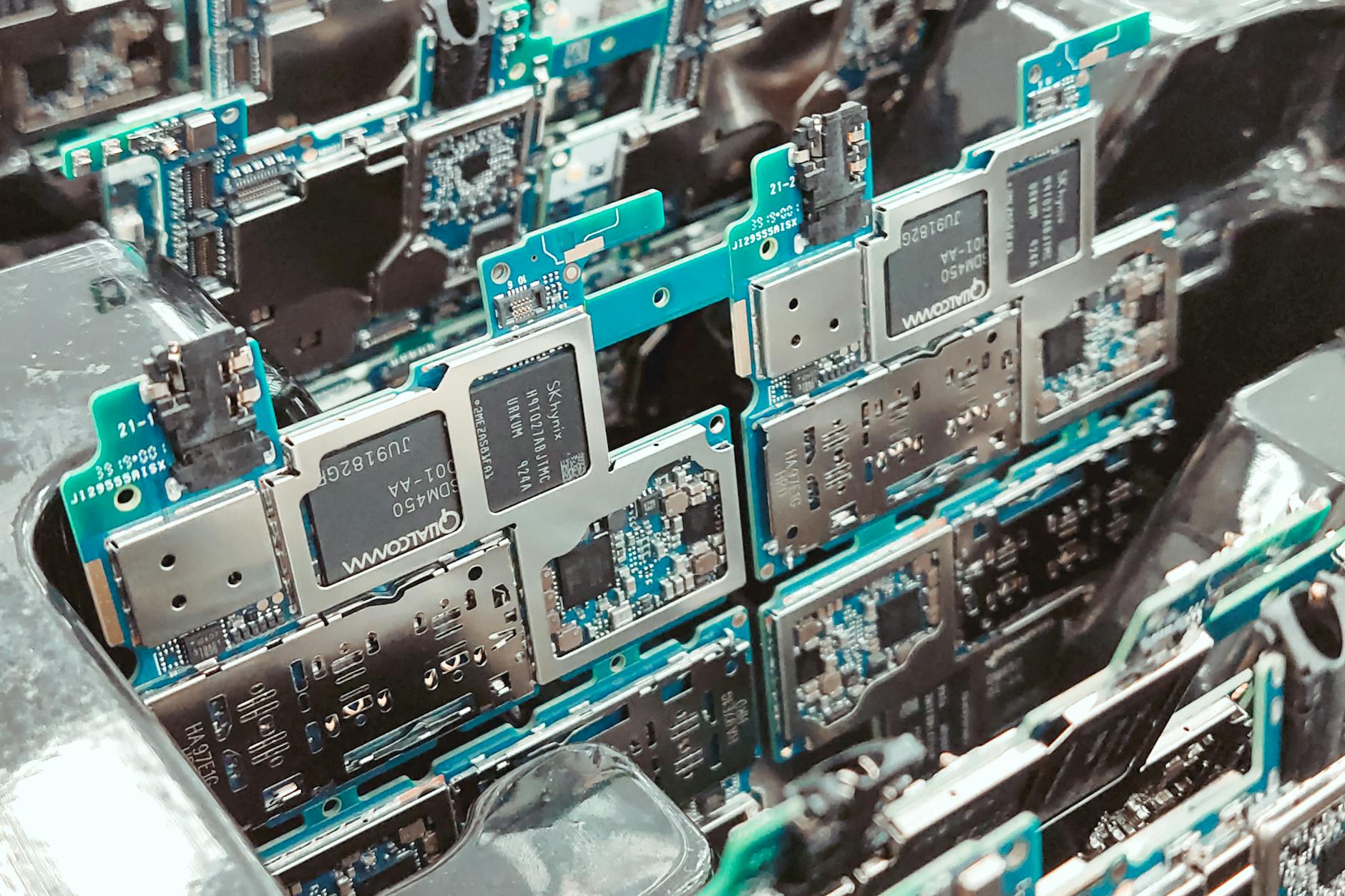
Photo by [Andrey Matveev](https://www.pexels.com/photo/silver-and-blue-circuit-board-5554949/) on Pexels
AI-generated article. Figures and regulatory references link to primary sources.
Consumer electronics sustainability has moved from a voluntary talking point to a hard compliance requirement. The sector is responsible for roughly 4% of global greenhouse gas emissions, a share set to grow as device shipments keep climbing. Yet most brands still lack product-level carbon data, leaving them exposed on three simultaneous fronts: tightening EU regulation, rising B2B procurement standards, and a mounting e-waste crisis that erodes consumer and investor trust. This post unpacks where the carbon really sits in an electronics product lifecycle, what the regulatory pipeline looks like through 2027, and what sustainability and LCA teams need to do right now to get ahead of it.
Key Takeaways
- The carbon footprint of a laptop spans all three lifecycle stages almost equally, with the use phase (38.3%), raw materials (36.5%), and manufacturing (24.7%) each carrying substantial weight. Reduction strategies that ignore any one of these stages will fall short.
- E-waste reached 62 million tonnes globally in 2022 and is on track to hit 82 million tonnes by 2030, growing five times faster than documented recycling capacity.
- The EU’s Ecodesign for Sustainable Products Regulation (ESPR) already covers smartphones and tablets from June 2025, with repairability scoring for consumer electronics coming through horizontal measures by the end of the decade.
- The WEEE Directive revision and the EU Circular Economy Act are in motion, set to introduce stricter collection targets and harmonised EPR obligations for electronics manufacturers.
- Product-level carbon footprint data calculated under ISO 14040/44 is increasingly required not just for regulatory compliance but as a prerequisite for credible green claims under the EU Green Claims Directive.
Where Electronics Carbon Sits: Rethinking the Obvious
The instinct most sustainability teams have is to look at manufacturing when they want to cut an electronics product’s carbon footprint. Factories, energy, assembly lines. That instinct is only partially right, and understanding why matters for where you allocate decarbonisation resources.
Take a laptop. According to Devera’s ISO 14040/44 Monte Carlo LCA, the median carbon footprint of a laptop is 215.10 kg CO₂e, ranging from 157.88 to 286.70 kg CO₂e depending on design and sourcing choices. What is striking is the spread across lifecycle phases: the use phase accounts for 38.3% of total impact, raw materials for 36.5%, and manufacturing for 24.7%. In other words, manufacturing is actually the smallest of the three main contributors. If a product team spends all its sustainability budget optimising factory energy while shipping a device with poor energy efficiency and a short useful life, they are optimising the wrong phase.
This has direct implications for how product carbon footprints should be scoped and reported. A cradle-to-gate calculation that stops at the factory gate captures only manufacturing and raw materials, missing the single largest phase entirely. For electronics, a full cradle-to-grave LCA is the only defensible scope.
The raw materials phase deserves equal scrutiny. At 36.5% of a laptop’s footprint, upstream material extraction is nearly as significant as the use phase. This is consistent with broader research showing that embodied GHG emissions from ICT devices account for approximately 67% of total lifetime emissions when looking specifically at production, mining, and supply chain transport. The carbon embedded in circuit boards, rare earth magnets, and battery cells is accumulated long before a product reaches the end user, and it cannot be recovered by switching to green electricity in the assembly plant alone.
The E-Waste Dimension: A Problem That Compounds the Carbon One
Carbon is not the only environmental dimension in consumer electronics sustainability, but it is the one that links most directly to lifecycle decisions. E-waste is the physical manifestation of lifecycle failure: products designed without repairability, without recycled content mandates, and without viable take-back infrastructure.
The UN’s Global E-waste Monitor found that e-waste generation is rising five times faster than documented e-waste recycling. A record 62 million tonnes of e-waste was produced in 2022, up 82% from 2010, and on track to rise another 32% to reach 82 million tonnes by 2030. Less than a quarter (22.3%) of that year’s e-waste mass was documented as properly collected and recycled, leaving roughly US$62 billion worth of recoverable natural resources unaccounted for.
The recycling gap is not just an environmental failure. Poor electronic waste management practices cost an estimated US$78 billion per year in externalized costs to human health and the environment. For brands operating under CSRD or preparing Environmental Product Declarations (EPDs), these externalized costs are exactly the kind of material risk that sustainability reporting frameworks are designed to surface.
Short product lifespans make the problem worse. Research indicates that increasing the useful lifespan expectancy of electronic devices by 50 to 100% can mitigate up to half of total GHG emissions. This is a staggering lever, one that product designers and LCA teams can quantify, model, and present to product leadership as a carbon reduction pathway. For a more detailed treatment of how product design choices translate into lifecycle impact, see Design for Environment Principles: A Practical Guide.
The Regulatory Pipeline: ESPR, WEEE, and What Changes in 2026 and Beyond
The regulatory environment for consumer electronics sustainability is accelerating faster than most compliance teams realise. Three frameworks are moving in parallel and their requirements overlap.
| Regulation | Key milestone | Scope and impact for electronics brands |
|---|---|---|
| ESPR smartphones & tablets ecodesign | In force from 20 June 2025 | Batteries must withstand 800 cycles at 80% capacity; spare parts available within 5-10 working days for 7 years post-sales; operating system upgrades for at least 5 years |
| ESPR Working Plan 2025-2030 | Adopted 16 April 2025 | Sets priority product categories; horizontal repairability measures for consumer electronics and small household appliances in the pipeline |
| ESPR Delegated Acts (public consultation) | Open late 2025 | Detailed sustainability requirements per priority group (electronics included) |
| Digital Product Passport standards | Finalised December 2025 (CEN/CENELEC) | Defines DPP structure, sharing, integration across industries; basis for the electronics DPP rollout |
| WEEE Directive evaluation | Published 2 July 2025 | Identified 5 shortcomings: scope, collection, critical raw material recovery, EPR harmonisation, treatment requirements |
| WEEE revision Call for Evidence | 1 August – 6 November 2025 | Stakeholder input window before formal proposal |
| WEEE Directive revision deadline | By 31 December 2026 | Commission mandate (Directive (EU) 2024/884); integrated into the upcoming EU Circular Economy Act |
| CSRD reporting (large electronics brands) | First report 2028 (FY 2027) | Mandatory disclosure of resource use, circularity, waste management: Scope 1, 2 and 3 |
ESPR: Ecodesign Comes to Electronics
The Ecodesign for Sustainable Products Regulation (ESPR), which entered into force on 18 July 2024, is set to significantly reshape the regulatory landscape for companies operating in the EU. As part of the European Green Deal, the ESPR introduces stringent sustainability and circular economy requirements that will directly impact product design, production and supply chains across multiple industries.
One of the first product categories to receive specific ecodesign requirements under the ESPR is mobile phones and tablets. From 20 June 2025, rules apply to smartphones, feature phones, cordless phones, and slate tablets sold in the EU, including durability and drop protection requirements.
According to the 2025-2030 ESPR working plan, the Commission will introduce horizontal measures on repairability for products such as consumer electronics and small household appliances. This means repairability is shifting from a voluntary sustainability argument to a regulatory obligation. The Digital Product Passport (DPP) is the ESPR’s central compliance mechanism, requiring product-level sustainability data to be structured, accessible, and maintained for the product’s lifetime plus ten years.
The DPP requirement is particularly significant for LCA and sustainability teams. The ESPR introduces a data burden that goes well beyond traditional sustainability reporting. Producing a compliant DPP requires product-level data: material composition, lifecycle environmental performance, supplier inputs, and carbon footprint, gathered and maintained at the individual product level, not at the company level. That is precisely the kind of data that a properly scoped ISO 14040/44 product carbon footprint delivers.
WEEE Revision and the Circular Economy Act
In July 2025, the European Commission released an evaluation of the WEEE Directive, assessing whether it remains fit for purpose, exploring possibilities for simplification, and determining whether a review is necessary. The EU WEEE Directive revision will reshape how businesses manage electronics compliance across Europe, with higher collection targets, stricter recovery goals, and harmonised EPR schemes on the horizon.
The upcoming EU Circular Economy Act will revise the WEEE Directive to focus on critical raw material recovery, improved collection rates, and enhanced producer responsibility requirements. Electronics manufacturers who have not yet mapped their product-level material flows will find themselves in a difficult position when these reporting requirements arrive.
CSRD: The Reporting Backbone
For electronics brands of sufficient size, CSRD creates the reporting layer that sits above all of the above. The EU’s Corporate Sustainability Reporting Directive (CSRD) mandates reporting on resource use, circular material use, and waste management practices, all areas where EPR performance provides critical data. For sustainability teams, the practical implication is that product-level carbon data is no longer just useful for marketing or voluntary disclosure. It feeds directly into mandatory ESG reporting.
Measuring What Matters: From Headline Claims to Product-Level Data
The gap between stated sustainability commitments and verified product-level data is one of the most persistent problems in consumer electronics sustainability. Many consumer electronics brands claim to reduce carbon emissions but outsource manufacturing and supply chains to countries with weak regulations. The consumer electronics industry promotes sustainability, but the supply chain often tells a different story.
Closing that gap requires methodology. ISO 14040/44 provides the internationally recognised framework for lifecycle assessment, and ISO 14067 specifies how to calculate and communicate product carbon footprints. These are not just compliance tools. They are the evidence base that separates substantiated claims from greenwashing exposure under the EU Green Claims Directive.
The Devera benchmark for laptops illustrates why granularity matters. A laptop scoring under 176.3 kg CO₂e earns an A grade; one above 259.63 kg CO₂e falls into a D. That 83 kg spread between an A and a D corresponds to real design choices: the energy grid mix assumed for the use phase, the proportion of recycled materials in the bill of materials, the logistics distance from manufacturing site to end market. None of those variables are visible in a company-level carbon inventory. They only become visible in a product carbon footprint calculation.
Calculating Scope 3 emissions, the largest source of CO₂ (40% or more) for manufacturers, has historically been cumbersome, time-consuming, and rarely performs as planned. This lack of awareness has created a significant blind spot for global manufacturers seeking to measure the entire carbon footprint of the electronics content in their portfolios. Tools that automate this at the product level, mapped to actual bills of materials and auditable emission factors, are no longer a nice-to-have for compliance teams. They are a prerequisite for the data infrastructure the ESPR’s Digital Product Passport will require.
For a broader view of how measurement practices are evolving across product categories, Brands That Measure: The New Reputational Value offers useful context on how leading companies are turning verified data into competitive positioning.
The Circular Economy Opportunity in Electronics
The regulatory pressure on consumer electronics sustainability is real, but the business case is not purely defensive. Mitigating GHG emissions through longer device lifespans requires coordination of eco-design and source reduction, repair, refurbishment, and reuse. Each of those levers represents a potential product or service line, from device-as-a-service models to certified refurbishment programmes.
Research by the International Electronics Manufacturing Initiative (iNEMI) indicates that some companies in the consumer electronics industry have already started taking steps toward sustainability and a circular economy, but the industry as a whole has not undertaken the steps toward closing the loop on recycling and reuse, partly due to a lack of economically viable infrastructure.
The LCA data reinforces the opportunity. Because the raw materials phase drives 36.5% of a laptop’s footprint, increasing the recycled content of key components is a direct carbon reduction mechanism, not just a circular economy talking point. When that reduction is quantified in kg CO₂e per unit and tied to a specific bill-of-materials change, it becomes a business case that procurement, R&D, and sustainability teams can act on together.
Frequently Asked Questions
What are the main sustainability problems in consumer electronics? The principal challenges are: high embodied carbon in raw material extraction and semiconductor manufacturing, an e-waste stream growing five times faster than recycling capacity, and short product lifecycles that accelerate resource consumption. Regulatory pressure from the EU’s ESPR, WEEE revision, and CSRD is now forcing these issues onto corporate sustainability agendas whether or not brands have the product-level data to address them.
How do you measure the carbon footprint of an electronics product? A product carbon footprint for consumer electronics should follow ISO 14040/44 and, for the communication of results, ISO 14067. This requires defining the functional unit (typically one device over its expected useful life), setting system boundaries that cover raw material extraction through end-of-life, and populating the lifecycle inventory with primary or secondary emission factors for each material and energy input. For electronics, using a cradle-to-grave scope is critical because the use phase typically represents the largest or second-largest carbon contributor.
Which EU regulations apply to consumer electronics sustainability in 2026? Several frameworks are active simultaneously. The ESPR already mandates specific ecodesign requirements for smartphones and tablets from June 2025, with broader horizontal measures on repairability for consumer electronics in development. The WEEE Directive is under revision, with the European Commission’s evaluation published in July 2025. CSRD reporting obligations expanded in 2025 to cover more companies, requiring disclosure on resource use, circularity, and waste. Each of these frameworks ultimately demands product-level data, making life cycle assessment a central capability rather than a secondary function.
Why does lifecycle phase matter for electronics carbon reduction strategy? Because the carbon is distributed across all phases, a strategy focused solely on manufacturing will leave the majority of impact unaddressed. For a typical laptop, the use phase (38.3%) and raw materials phase (36.5%) together account for nearly three-quarters of total footprint. That means the most impactful levers are often energy efficiency during use and recycled content in materials, not factory-level emission reductions. Without phase-level LCA data, it is impossible to know which of these levers to prioritise for a specific product.
For sustainability teams who need defensible numbers backed by auditable methodology, Devera runs ISO 14040/44 Monte Carlo LCA at product scale, mapped to your actual bill of materials. Whether you are building a WEEE compliance strategy, preparing DPP-ready data, or benchmarking a device against category peers, the analysis starts at the product level. Explore how Devera handles consumer electronics LCA or see pricing for your portfolio size.