
Electric Vehicle Lifecycle Emissions: The Full Picture
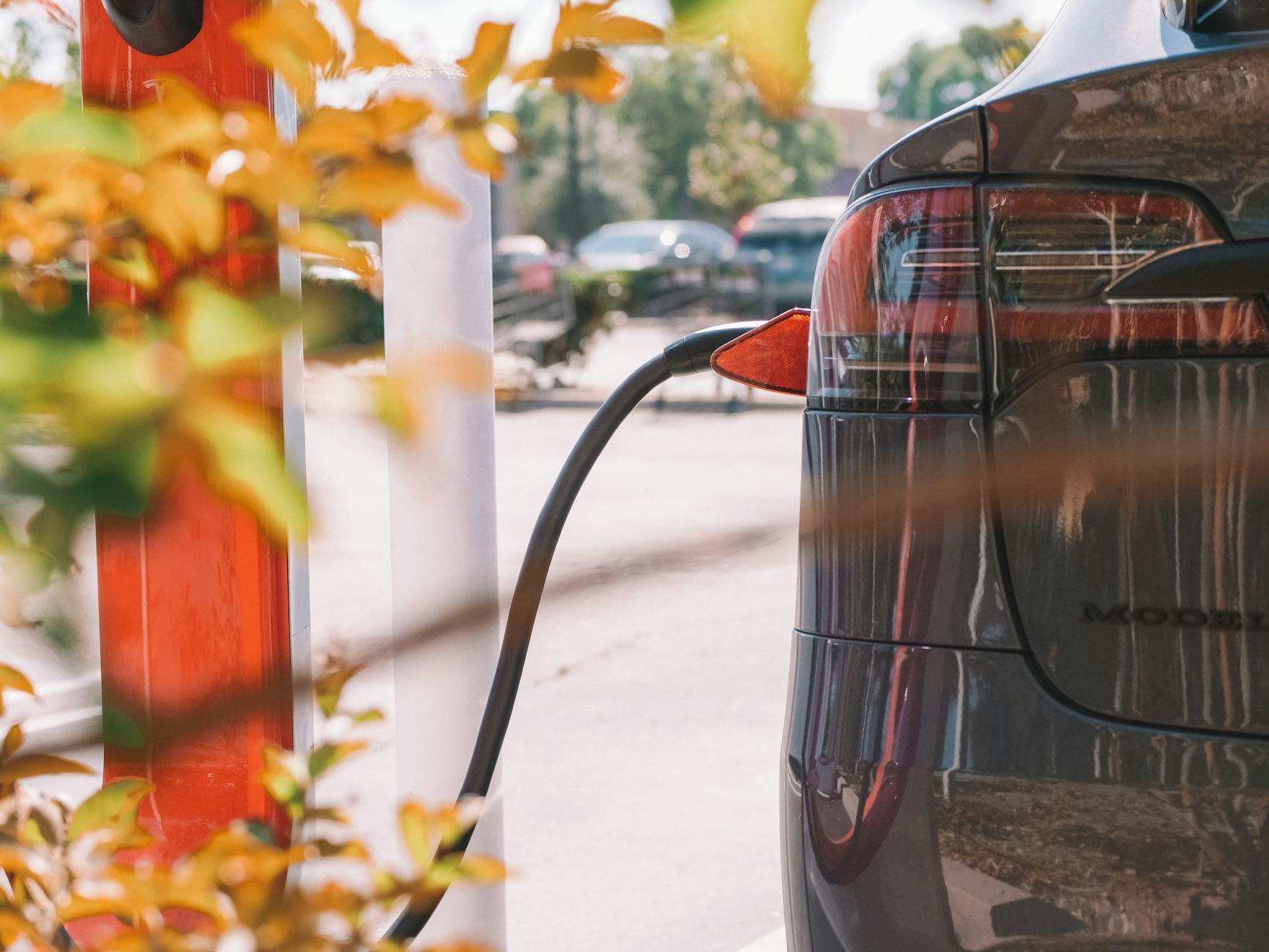
Photo by [Kindel Media](https://www.pexels.com/photo/charging-of-a-vehicle-in-a-chraging-station-9799740/) on Pexels
AI-generated article. Figures and regulatory references link to primary sources.
When people debate electric vehicles and climate, the conversation almost always starts and ends at the tailpipe, or the lack of one. But a rigorous electric vehicle lifecycle emissions comparison tells a far more nuanced story. Lifecycle emission assessments, sometimes called “cradle-to-grave” analyses, add up all the ways emissions can be associated with a car, manufacturing, operating, upstream emissions, and end of life. This post breaks down exactly what that full picture looks like, where the numbers are misunderstood, and why the grid you charge on shapes your EV’s carbon story as much as the car itself does.
Key Takeaways
- EVs generate significantly more emissions during manufacturing than conventional cars, primarily because of battery production, but this “carbon debt” is repaid through driving.
- According to the ICCT 2025 EU lifecycle analysis, battery electric cars produce 73% lower lifecycle emissions than gasoline cars (63 vs 235 g CO₂e/km on the projected 2025-2044 EU grid), rising to 78% lower when powered exclusively by renewable electricity.
- The electricity grid you charge on is the single biggest variable in determining your EV’s real-world carbon footprint.
- A 2025 study in Communications Earth & Environment analysed 5,000 comparative cases and found BEVs consistently have the lowest carbon footprints versus hybrid, plug-in hybrid, and fuel-cell vehicles, with an average 32 to 47% lower footprint than hybrid combustion vehicles.
- Battery recycling and grid decarbonization will further reduce EV lifecycle emissions in coming years, making EVs an increasingly cleaner choice over time.
The Carbon Debt at Birth
The most common criticism of electric vehicles is also the one that contains the most truth: making an EV is dirtier than making a petrol car. Electric cars generally produce more emissions during manufacturing, largely due to battery production, which creates an initial “carbon debt” compared with petrol cars. A study comparing EV and ICE emissions found that 46% of EV carbon emissions come from the production process, while for an internal combustion engine vehicle they account for only 26%.
This is not a flaw in the EV argument, it is simply the reality that a large lithium-ion battery pack carries substantial embodied carbon. Using primary industry data, cradle-to-gate emissions for a commercial PHEV battery have been estimated at 1.38 tonnes CO₂e, with 78% coming from materials and parts production and 22% from cell, module, and pack manufacturing. Lithium, cobalt, and nickel must all be mined, refined, and transported before a single kilometre is ever driven.
To understand how this compares within the broader landscape of manufactured goods, it helps to zoom out. Consider that a single laptop, according to Devera’s benchmark data, carries a median footprint of 215.10 kg CO₂e (range: 157.88–286.70 kg CO₂e), with raw materials alone accounting for 36.5% of its total impact. Now multiply that by the scale of a 75 kWh EV battery, which involves tens of kilograms of similarly extracted and refined materials. The manufacturing phase of an EV is not an anomaly in industrial production, it is the nature of complex, materials-intensive products. The critical difference is what happens next.
Where the Equation Flips: Use Phase and the Grid
The initial carbon debt is finite. Once the car is on the road, emissions are dramatically lower. Petrol and diesel cars continue emitting CO₂ throughout their lives, their emissions curve rises steadily and never flattens. Electric cars, by contrast, start higher but then level off, and ultimately end far lower.
The speed at which an EV “breaks even” varies enormously based on where and how it is charged. According to the ICCT 2025 lifecycle analysis, a BEV in Europe will offset its higher manufacturing emissions after about 17,000 km (roughly 10,500 miles) of use, typically one to two years of driving. In Norway, where almost all electricity comes from hydro, the break-even point is even shorter. In regions where the majority of electricity comes from coal, such as parts of China, older estimates (pre-2023 grid data) place break-even at around 78,700 miles (about 127,000 km), a figure that continues to fall as those grids decarbonise.
The grid dependency is the single most important variable in any electric vehicle lifecycle emissions comparison, and the one most often ignored in popular debate. Per the ICCT 2025 analysis, BEVs on the EU average grid produce around 63 g CO₂e/km over their full lifecycle, versus 235 g CO₂e/km for gasoline ICEVs. On a 100% renewable grid that figure drops to about 52 g CO₂e/km (78% lower than gasoline). Even on a coal-heavy grid, BEVs remain cleaner than gasoline over the full vehicle life, with the margin narrowing but not reversing.
The encouraging structural reality is that electricity grids are getting cleaner over time, while gasoline will never stop being a fossil fuel. The lifecycle benefits of EVs are increasing over time as electricity grids get cleaner. An EV bought today will be charged on an increasingly low-carbon grid throughout its life, a compounding environmental advantage that no petrol car can replicate.
A Closer Look at the Full Lifecycle
To understand EV lifecycle emissions properly, it helps to think in distinct phases: production, use, and end of life. Each carries its own weight in the overall carbon budget.
Production: The Front-Loaded Cost
As established above, production dominates the initial carbon picture for EVs. The grid used to manufacture the battery matters as much as the grid used to charge the car. The greenhouse gas emissions of battery production are highly dependent on the regional grid carbon intensity. Batteries produced in China, for example, have higher GHGs than those produced in the United States and European Union.
This is why the concept of life cycle assessment matters so profoundly for automotive sustainability claims. A manufacturer that reports only tailpipe emissions is telling a fraction of the story.
Use Phase: Where EVs Earn Their Advantage
Over the course of its life, a new gasoline car in the US will produce an average of 410 grams of carbon dioxide per mile, while a new electric car produces around 110 grams (roughly 254 and 68 g/km respectively). That is a 73% operational advantage, and it compounds over hundreds of thousands of kilometres.
Here is where an analogy from outside the automotive world sheds useful light. Devera’s benchmark data for a laptop shows that the use phase accounts for 38.3% of a laptop’s total lifecycle footprint, the single largest contributor. The lesson is that for any powered product, how it is used and what energy powers it shapes outcomes at least as much as how it is made. For EVs, the use phase is where the carbon argument is won or lost, and it is won decisively when grids are reasonably clean.
End of Life: The Emerging Opportunity
End-of-life recycling is the least developed chapter of the EV lifecycle story, but potentially the most transformative. Electric car batteries last 15 to 20 years in vehicles, then often enjoy a second life in energy storage before being up to 95% recyclable. The difference is especially pronounced when these vehicles are manufactured using and powered by clean electricity and are recycled, with up to 92% emissions reduction over their lifetimes compared to conventional vehicles.
Battery second-life applications, using spent EV batteries as stationary energy storage, allow the embodied carbon of battery production to be amortised across two distinct use phases. This changes the calculus further in EVs’ favour as recycling infrastructure scales up.
Hybrids and Plug-In Hybrids: Not the Middle Ground You Think
Many consumers assume that a plug-in hybrid represents a sensible compromise, lower manufacturing emissions than a full BEV, combined with electric efficiency for daily driving. The lifecycle data complicates this assumption considerably.
The ICCT 2025 analysis estimates life-cycle GHG emissions of hybrid electric vehicles at 188 g CO₂e/km, while plug-in hybrids sit at 163 g CO₂e/km when considering real-world fuel and electricity usage. These values are 20% and 30% lower than gasoline cars, but roughly three times higher than BEVs on the EU average electricity mix.
The gap between PHEVs and BEVs is wider than most people expect, and it is growing. As the electricity grid decarbonises, BEVs benefit automatically. PHEVs, which continue to burn petrol for a significant portion of their journeys, real-world PHEV fuel consumption has been found to exceed official test values by a factor of 3 on average for privately owned vehicles, do not receive the same compounding benefit.
The Role of Rigorous LCA Methodology
One reason the electric vehicle lifecycle emissions comparison debate remains muddied is that not all LCA studies use the same assumptions. For BEVs, life-cycle emissions can be overestimated by as much as 64% when less representative assumptions are used, for example, by locking in today’s grid carbon intensity instead of accounting for grid improvements over a vehicle’s 15 to 20-year life.
This is why methodology matters enormously. A genuine ISO 14040/44-compliant LCA, applying Monte Carlo simulation to capture uncertainty and using prospective grid data, produces substantially different results than a back-of-the-envelope calculation. The full guide to life cycle assessment explains why the scope definitions, system boundaries, and data quality all shape the conclusions dramatically.
Consider how this plays out with another product entirely. Devera’s benchmark for a stool shows a median footprint of 21.57 kg CO₂e with a range of 8.34–44.83 kg CO₂e, a more than fivefold spread between the best and worst performers. That kind of variance, across a product far simpler than an EV, illustrates how sensitive lifecycle results are to material choices, manufacturing energy sources, and end-of-life handling. For a product as complex as an electric vehicle, the methodology choices matter even more.
Applying consistent, transparent methodology is also becoming a regulatory expectation. The EU Battery Regulation now requires carbon footprint declarations for EV batteries, following the JRC’s Carbon Footprint Rules for Electric Vehicle Batteries, building on Environmental Footprint methodology aligned with ISO 14040. If you want to understand how to calculate your own product’s carbon footprint with the same rigour applied to EVs, the approach is the same: full cradle-to-grave scope, phase-by-phase breakdown, and verified data.
What the Numbers Mean for Consumers and Manufacturers
For consumers, the takeaway from any honest electric vehicle lifecycle emissions comparison is clear. In any of several major markets, the lifecycle CO₂ emissions of a medium-sized BEV manufactured today and driven for 250,000 kilometres would be 27–71% lower than those of equivalent internal combustion engine vehicles. The variance in that range is almost entirely explained by the electricity grid, not by the car itself.
For manufacturers and fleet operators, the data points to three levers: clean energy in battery production facilities, renewable or low-carbon charging infrastructure, and end-of-life battery recycling programmes. Using cleaner electricity for battery production would enable a 5% saving on BEV lifecycle emissions, while best-in-class supply chains for sourcing lithium, nickel, and graphite can further decrease BEV lifecycle emissions by a further 13%.
The brands that measure these things rigorously, not just tailpipe emissions but the full lifecycle, are the ones best positioned to make credible sustainability claims. If you are working on product-level carbon transparency, understanding what measuring really means for your business is a useful starting point.
Conclusion
An honest electric vehicle lifecycle emissions comparison does not tell a simple story, but it does tell a consistent one: battery electric vehicles carry a higher carbon burden at birth and pay it back quickly through dramatically cleaner operation. Battery electric vehicles meaningfully retain their advantage for mileages over 100,000 km, even in regions with carbon-intensive electricity, since these regions are anticipated to decarbonise the most. The longer an EV is driven, and the cleaner the grid it charges on, the greater the climate advantage over any internal combustion alternative.
The conversation cannot stop at the tailpipe, in either direction. It must account for mining, manufacturing, charging, and end of life. That is exactly what a rigorous LCA does, and it is the standard to which all sustainability claims in the automotive sector should be held.
If you are looking to apply the same level of rigour to your own products, Devera’s AI-powered platform makes ISO 14040/44-compliant carbon footprinting accessible. Calculate your product carbon footprint and get phase-by-phase transparency, because in sustainability, the detail is always where the story is.
Frequently Asked Questions
What does an electric vehicle lifecycle emissions comparison actually include? A full lifecycle comparison covers emissions from raw material extraction (including battery minerals like lithium and cobalt), vehicle manufacturing, electricity generation for charging during the use phase, and end-of-life handling such as battery recycling. Comparing only tailpipe emissions, or only manufacturing emissions, gives a partial and misleading picture of a vehicle’s true climate impact.
How does the electricity grid affect EV lifecycle emissions? The carbon intensity of the grid used to charge an EV is the single most important variable after the car is manufactured. An EV charged on a renewables-dominated grid achieves up to 78% lower lifecycle emissions than a petrol car, while one charged on a coal-heavy grid achieves a smaller but still positive reduction. Because grids are becoming cleaner over time, an EV bought today will automatically become greener throughout its life.
How long does it take for an electric car to offset its manufacturing emissions? The break-even point, where an EV’s cumulative lifecycle emissions fall below those of a comparable petrol car, depends on driving distance, grid carbon intensity, and vehicle size. In Europe, the ICCT 2025 analysis places this point at around 17,000 km (approximately 10,500 miles), typically one to two years of driving. In the United States using average grid data, estimates range from 13,500 to 21,300 miles. For most drivers, this represents less than two years of typical use.
Will EV lifecycle emissions improve further in the future? Yes, and meaningfully so. As electricity grids integrate more renewables, as battery manufacturing shifts to lower-carbon energy sources, and as end-of-life recycling infrastructure scales up, the lifecycle footprint of electric vehicles will continue to fall. Research consistently shows that BEVs sold in 2030 will have substantially lower lifecycle emissions than those sold today, widening the gap with conventional vehicles even further.