
Ecodesign 2022: What the ESPR Means for Manufacturers
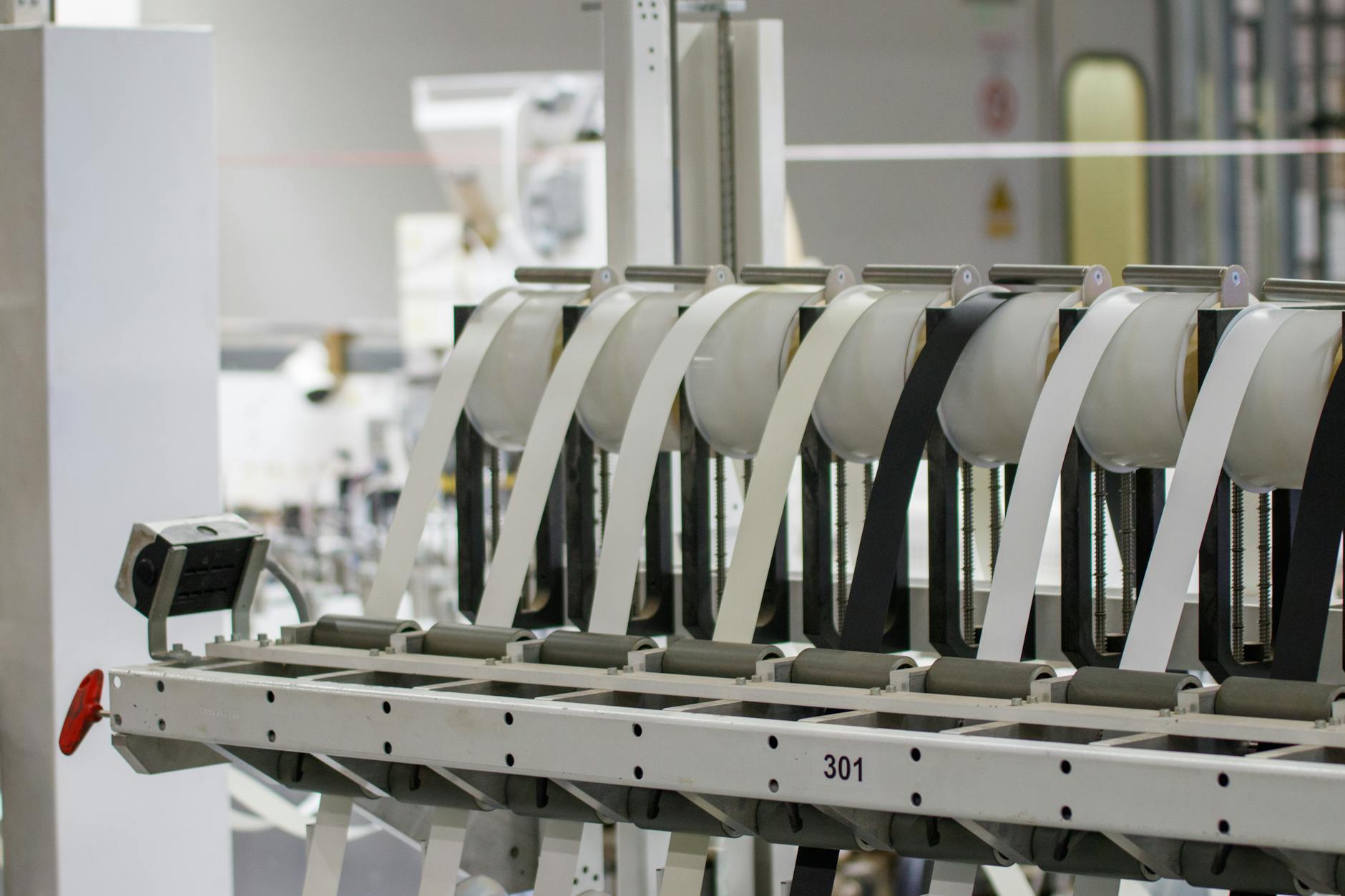
Photo by [Freek Wolsink](https://www.pexels.com/photo/high-tech-industrial-manufacturing-facility-34221997/) on Pexels
AI-generated article. Figures and regulatory references link to primary sources.
March 30, 2022 was not a routine date on the Brussels calendar. On that day, the European Commission simultaneously published the Ecodesign and Energy Labelling Working Plan 2022-2024 and proposed an entirely new regulation to replace the existing Ecodesign Directive: the Ecodesign for Sustainable Products Regulation, or ESPR. Together, these two documents redefined what compliance means for any manufacturer or importer selling on the EU market. If your product team has not yet mapped its lifecycle data to the new framework, this guide explains what changed, why it matters, and what the path to compliance actually looks like in practice.
Key Takeaways
- On 30 March 2022, the European Commission proposed the ESPR and published the Working Plan 2022-2024, two complementary documents that together set the direction for EU product sustainability policy well into the 2030s.
- The ecodesign 2022 package expanded scope dramatically: where the old Ecodesign Directive covered only energy-related products, the ESPR applies to almost all physical goods sold in the EU, including furniture, textiles, and tyres.
- The Digital Product Passport (DPP), introduced under the ESPR, will require verified product carbon footprint data compliant with ISO 14067 or a full life cycle assessment following PEF methodology.
- Raw materials are responsible for the largest share of carbon emissions in most physical product categories, meaning design-stage decisions carry more weight than many sustainability teams assume.
- Companies should begin building auditable lifecycle data now, before product-specific delegated acts lock in requirements for their categories.
Two Documents, One Turning Point
To understand what “ecodesign 2022” actually means, it helps to separate the two instruments published on the same day.
The first is the Ecodesign and Energy Labelling Working Plan 2022-2024, an operational roadmap that updated priorities under the existing directive. The existing ecodesign and labelling requirements alone were estimated to have saved EU citizens more than €120 billion in 2021. The 2022-2024 plan built on that track record by strengthening the focus on circularity aspects of ecodesign and labelling requirements for energy-related products and tyres, while also identifying priorities and new candidates for efficiency product groups and exploring new product-specific requirements on material efficiency aspects, particularly on recycled content, critical raw materials, reparability and durability.
The second and more consequential document was the ESPR proposal itself. Presented as a proposal by the European Commission on 30 March 2022, the ESPR forms part of the Sustainable Products Initiative, which includes a range of proposals released in support of the European Green Deal. The goal is to “make sustainable products the norm in the EU” by increasing their durability, reusability, repairability, recyclability and energy efficiency.
The ecodesign 2022 package, in other words, was not just an update. It was a structural shift.
What Changed: From Energy Products to Almost Everything
Under the previous Ecodesign Directive 2009/125/EC, the rules applied mainly to energy-using products such as refrigerators, washing machines, and lighting. The 2022 proposal removed that boundary. The ESPR significantly extends the scope of the existing EU Ecodesign Directive regime, which has to date focused on energy-using products, to cover the broadest possible range of products. As a result, product categories such as furniture, mattresses, tires, detergents, paints and lubricants, as well as intermediate products like iron, steel and aluminum, will become subject to ecodesign requirements.
Adopted by the EU Parliament and EU Council in 2024, the ESPR officially entered into force on 18 July 2024. From that date, the ESPR is based on, and will ultimately replace in full, the Ecodesign Directive 2009/125/EC, with a transition regime lasting until 2030 in place to prevent any gap in enforcement.
The ESPR introduces three main changes from the previous Ecodesign Directive: rules on Digital Product Passports (DPPs), green public procurement, and the prohibition on destruction of unsold products.
The implications for product and sustainability teams are significant. Products must be designed to maximise their useful life and, where possible, exceed the generally observed lifespan within the same specific product groups, to minimise the need for replacement. The design must facilitate disassembly and repair, meaning that components and sub-assemblies must be accessible for easy repair or replacement when necessary.
For a deeper dive into how these requirements fit within the broader regulatory picture, our Ecodesign Regulation (ESPR): A Complete 2026 Guide walks through the full framework.
Where the Carbon Actually Lives: A Product-Level Reality Check
One of the most practical implications of the ecodesign 2022 shift is that it forces brands to look at a product’s full lifecycle, not just its manufacturing phase. The data tells a story that surprises many product teams.
Consider the car tyre, one of the product categories explicitly listed for ESPR regulation. Devera’s ISO 14040/44 lifecycle assessment calculates the carbon footprint of a car tyre at a median of 41.41 kg CO₂e, with a range of 32.12 to 51.90 kg CO₂e. The phase breakdown is striking: raw materials account for 65.0% of the total footprint, while manufacturing represents 27.8% and transport just 6.2%. For a tyre manufacturer responding to ESPR requirements, that means reducing carbon at the manufacturing stage alone leaves nearly two-thirds of the product’s impact untouched. The leverage is almost entirely upstream, in the choice of synthetic rubber, steel cord, and carbon black.
Now compare that with a laptop, another product category being drawn into ESPR scope via electronics delegated acts. According to Devera’s carbon footprint benchmark for a laptop, the median footprint is 215.10 kg CO₂e (range: 157.88 to 286.70 kg CO₂e), with the use phase contributing 38.3%, raw materials 36.5%, and manufacturing 24.7%. Here the distribution is more even, and use-phase energy intensity matters considerably. The two products require completely different ecodesign strategies, even if they fall under the same regulatory umbrella.
This is precisely why the life cycle assessment methodology that underpins ESPR compliance is not interchangeable between product categories. Ecodesign decisions must be grounded in actual phase-by-phase data, not sector-level averages.
The Digital Product Passport: LCA as Infrastructure
The most operationally demanding element of the ESPR is arguably the Digital Product Passport. Of all the data required in the Digital Product Passport, life cycle assessment and the resulting environmental footprint are the most difficult to prepare and, at the same time, the most important. LCA data answers the central question: what is the product’s actual environmental impact? A product carbon footprint calculated in accordance with ISO 14067:2018 is the minimum environmental requirement for most DPP categories.
The DPP is not a marketing tool. The ESPR places particular emphasis on carbon footprint, with carbon footprint data expressed in kilograms of CO₂e and required at different lifecycle stages: raw material extraction, manufacturing, transport, use phase, and end-of-life treatment. The methodology for calculation must follow recognised standards such as the Product Environmental Footprint (PEF) method or ISO 14067.
For sustainability teams building toward DPP compliance, the practical challenge is data fragmentation. DPPs will require extensive data collection, as most sustainability, material, and supplier data is fragmented across ERP, Product Lifecycle Management (PLM), and third-party systems. Connecting those data streams to a methodology that produces auditable, standard-compliant output is where most organisations currently fall short.
ESPR requirements for the first prioritised products are expected to come into force in 2026. Companies should already start preparing with corporate and product carbon footprints in order to ready themselves for the new information and performance requirements.
The 2025-2030 Working Plan: Which Products Are Next
The ecodesign 2022 moment set the legislative foundation, but the regulatory calendar is moving fast. The first ESPR and Energy Labelling Working Plan was adopted and published in April 2025, covering five years with a review in 2028.
The preliminary list of identified products for the first working plan includes textiles, furniture, mattresses, tires, detergents, paints, and lubricants. Delegated acts for individual product groups will specify the exact performance thresholds, information requirements, and DPP data fields that apply to each category.
The following table shows the ESPR’s key structural differences from its predecessor, which is useful context for compliance planning:
| Feature | Ecodesign Directive 2009/125/EC | ESPR (from 2024) |
|---|---|---|
| Product scope | Energy-related products only | Almost all physical products |
| Key requirements | Energy efficiency | Durability, repairability, recyclability, carbon footprint, recycled content |
| Digital transparency | None | Digital Product Passport (DPP) required |
| Unsold goods | No provisions | Destruction of unsold goods prohibited |
| Carbon footprint | Not required | PCF per ISO 14067 or PEF mandatory for DPP |
| Timeline | Ongoing since 2009 | In force July 2024; delegated acts from 2025 |
Each Member State will impose effective, proportionate, and dissuasive penalties for economic operators who fail to comply with ecodesign requirements in their market, with penalties proportionate to the extent of non-compliance and the number of non-compliant units placed on the market.
What “Ecodesign by Design” Means for Sustainability Teams
The ecodesign 2022 package asks a fundamental question of any product organisation: at what stage of development do you first measure environmental impact? Historically, sustainability assessments have been conducted retrospectively, after a product is already in production. The ESPR makes that approach untenable.
In this EU regulation, ecodesign is defined as the integration of environmental sustainability considerations into product characteristics and processes implemented throughout the product value chain. That means carbon footprint data needs to feed into R&D and sourcing decisions, not just annual reports.
The wardrobe category, another product group listed for ESPR delegated acts under furniture, illustrates this clearly. Devera’s benchmark for a wardrobe shows a median of 159.41 kg CO₂e, but the range is remarkably wide: 67.61 to 263.58 kg CO₂e. That is a nearly four-fold difference between the lowest and highest-performing products in the same category. Raw materials account for 39.9% of the impact, manufacturing for 26.8%, and end of life for 22.0%. The practical takeaway is that a furniture manufacturer who redesigns for disassembly and uses lower-carbon board materials can realistically cut their product’s footprint by more than half. This is exactly the type of decision that ecodesign requirements are designed to incentivise, and it requires product-level LCA data to model.
For teams working across product categories with packaging-intensive outputs, the impact of packaging on sustainability is a related area of ESPR scope worth reviewing alongside material and manufacturing requirements.
While the landscape of product sustainability is still evolving, businesses may leverage these changes as a competitive advantage and make use of the guidance of other stakeholders. Companies that build LCA capability now, before their specific delegated act is finalised, will enter the compliance window with auditable baselines already in place rather than scrambling to reconstruct historical data under regulatory pressure.
Frequently Asked Questions
What is the Ecodesign 2022 regulation and how does it differ from the previous directive? The ecodesign 2022 moment refers to March 30, 2022, when the European Commission proposed the Ecodesign for Sustainable Products Regulation (ESPR) and published the new Working Plan 2022-2024. Unlike the previous Ecodesign Directive, which covered only energy-related products, the ESPR applies to almost all physical goods sold in the EU and adds requirements around repairability, recycled content, and Digital Product Passports. It entered into force on 18 July 2024.
Which product categories are in scope under the ESPR working plan? The first ESPR working plan, published in April 2025 and covering 2025 to 2030, prioritises categories including textiles, furniture, mattresses, tyres, detergents, paints, and lubricants. Product-specific requirements will be set through delegated acts, with the first acts targeting some categories from 2026 onwards. Energy-related products already regulated under the old directive continue under a transition regime until 2030.
Why does LCA methodology matter for ESPR compliance? The Digital Product Passport, which is mandatory under the ESPR for regulated product categories, requires verified carbon footprint data expressed in kg CO₂e across lifecycle stages. The calculation methodology must follow ISO 14067 or the EU Product Environmental Footprint (PEF) method. Without a credible, standard-aligned LCA, manufacturers cannot populate a compliant DPP and will be unable to place their products on the EU market once delegated acts come into force.
How should sustainability teams prepare for ecodesign compliance today? The most practical first step is building product-level carbon footprint data using a recognised methodology such as ISO 14040/44 or ISO 14067. This creates an auditable baseline that can be submitted into a DPP data structure when your product category’s delegated act is finalised. Mapping your bill of materials to lifecycle phases also reveals where the largest emission hotspots sit, which informs both sourcing decisions and design trade-offs before requirements are locked in.
For sustainability teams who need defensible, audit-ready numbers across a whole product portfolio, not just a single SKU, Devera maps your bill of materials to ISO 14040/44-compliant lifecycle stages and produces product carbon footprints that are ready for DPP integration, EPD reporting, and ESPR delegated act compliance. See how it handles your category at devera.ai/pricing.