
Sustainable Clothing: LCA, Measurement & 2026 Compliance
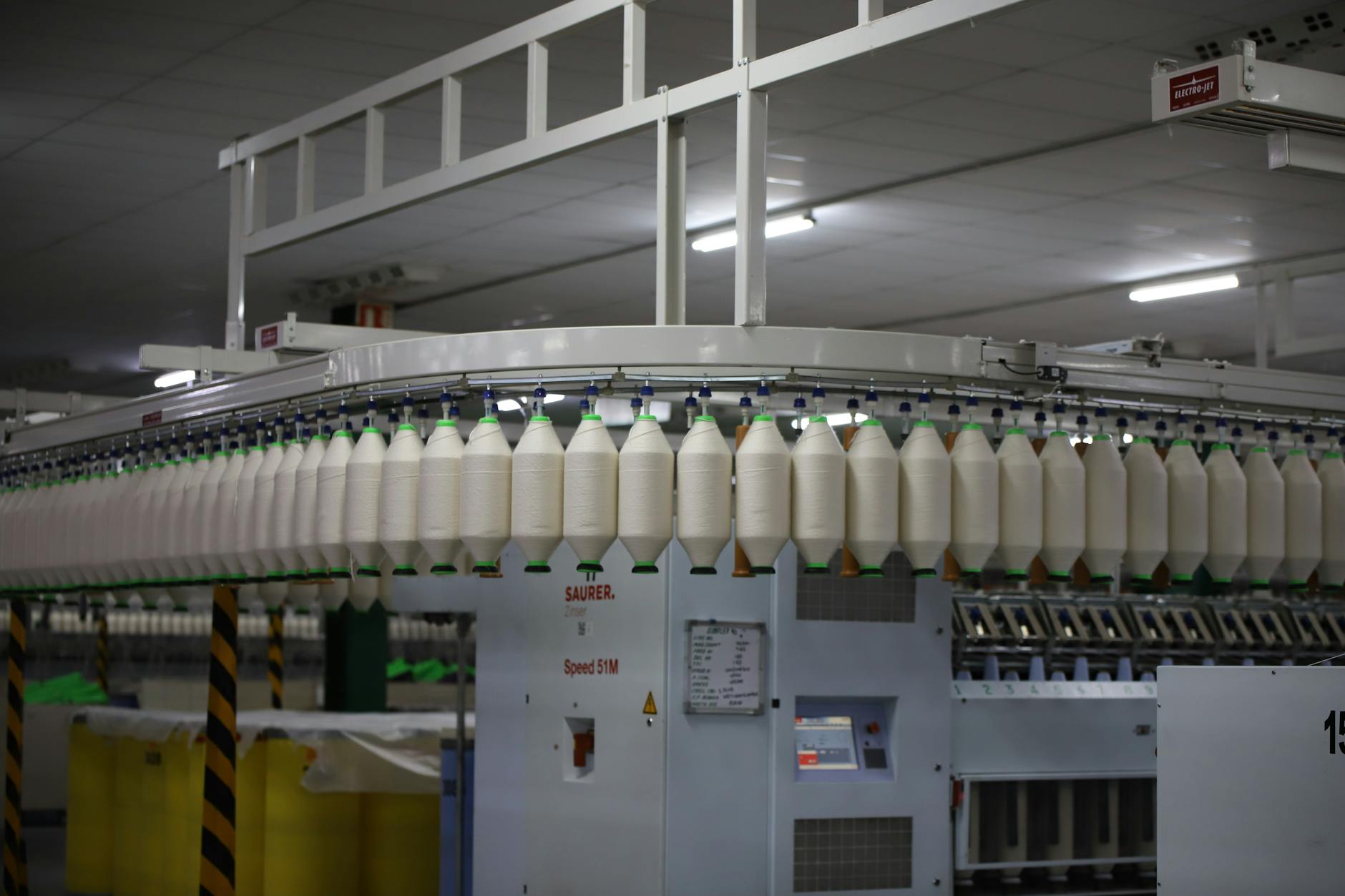
Photo by [RAJESH KUMAR VERMA](https://www.pexels.com/photo/white-threads-in-factory-8246480/) on Pexels
The fashion industry sits at a genuine inflection point. The textile and garment sector accounts for an estimated 6 to 8 percent of total global carbon emissions, approximately 1.7 billion tonnes of CO₂ annually. Against that backdrop, “sustainable clothing” has gone from marketing language to a boardroom priority, and increasingly, a legal obligation. What this post covers is exactly how textile brands, manufacturers, and sustainability teams can stop relying on intuition and start quantifying the actual impact of their products, phase by phase, using the methodology that regulators and buyers are beginning to demand.
Key Takeaways
- The textile and garment industry contributes an estimated 6 to 8 percent of global carbon emissions, making product-level measurement a competitive and compliance necessity, not just a branding exercise.
- Devera’s ISO 14040/44 LCA benchmark data shows that a typical t-shirt carries a median footprint of 3.01 kg CO₂e, with manufacturing responsible for 60.1 percent of that total, a counterintuitive finding that challenges the common assumption that raw materials dominate.
- EU regulations are reshaping how product design (ESPR), environmental claim communication (ECGT/UCPD), sustainability reporting (CSRD), and product data (Digital Product Passport) are handled by fashion brands.
- Life cycle assessment under ISO 14040/44 is the foundational methodology for credible, defensible sustainable clothing claims.
- Brands that build product-level carbon data infrastructure now will be better positioned for CSRD reporting deadlines, Digital Product Passport rollout, and greenwashing enforcement under the ECGT from September 2026.
Why “Sustainable” Needs a Number Next to It
Walk through any trade show in 2026 and you will hear “sustainable clothing” used to describe everything from organic-cotton basics to garments made with 5 percent recycled polyester. The problem is not the intent, it is the absence of measurement. The explosion of green claims, with brands advertising their products as eco-friendly or sustainable, has driven a demand for authentic evidence; consumers, watchdog organisations, and policymakers are increasingly holding brands accountable, and a rigorous LCA serves as a credible tool to validate those claims.
This is not just reputational risk. The Dutch Authority for Consumers and Markets has already flagged H&M and Decathlon for using sustainability-related terms like “Conscious” and “Ecodesign” without clear definitions or supporting evidence, and both brands were required to revise their labelling and marketing practices. The era of claiming sustainability without showing the calculation is over.
The answer is not a certification badge. It is data, specifically, product carbon footprint (PCF) data generated through a rigorous life cycle assessment following ISO 14040 and ISO 14044.
What an LCA Actually Reveals for a Clothing Brand
Life cycle assessment is the process of quantifying the environmental impact of a product across every stage of its existence, from raw material extraction through manufacturing, distribution, consumer use, and final disposal. The methodology is governed by ISO 14040 and ISO 14044, which define a four-phase process: goal and scope definition, life cycle inventory, life cycle impact assessment, and interpretation.
What makes LCA genuinely valuable for clothing brands, as opposed to carbon accounting at the company level, is that it reveals where within the product’s journey the impact is actually concentrated. And the findings are routinely counterintuitive.
The T-Shirt Data That Challenges Conventional Wisdom
Consider a product most clothing brands sell: the t-shirt. The prevailing assumption is that the biggest impact comes from growing the cotton or making the polyester. Devera’s LCA benchmark, built from 10,000 Monte Carlo simulations following ISO 14040/44, tells a different story.
The median carbon footprint of a t-shirt is 3.01 kg CO₂e, with an 80 percent confidence interval spanning from 2.12 kg CO₂e to 4.12 kg CO₂e, reflecting real-world variability in fiber type, manufacturing location, and end-of-life treatment. That nearly 2 kg range is not noise, it is the signal. It tells you that choices about where you manufacture, what energy grid powers that factory, and what happens to the garment at end of life all matter enormously.
But the phase breakdown is where the real insight sits. According to Devera’s t-shirt benchmark, manufacturing accounts for 60.1 percent of the total footprint, while raw materials contribute 23.5 percent and the use phase (washing and care) adds 11.8 percent. Manufacturing is not just a small contributor, it is the dominant source, responsible for more than twice the impact of the raw material stage. Dyeing and finishing stages are particularly energy-intensive, requiring large amounts of heat and steam, and many textile-producing regions still rely on coal and natural gas, making these processes even more carbon-intensive.
For a sustainability team, this reframes the entire decarbonisation conversation. A brand switching from conventional to organic cotton, while continuing to manufacture in coal-powered facilities, will move the footprint needle far less than renegotiating with a manufacturer on a cleaner grid. The LCA data tells you which lever is actually worth pulling.
The Wardrobe Benchmark: Putting Scale in Perspective
The t-shirt benchmark also gains meaning when you consider how clothing is stored and displayed. Devera’s wardrobe LCA benchmark puts the furniture housing our clothing at a median of 159.41 kg CO₂e per unit (range: 67.61 to 263.58 kg CO₂e), with raw materials at 39.9 percent, manufacturing at 26.8 percent, and end of life at a notable 22.0 percent. A single wardrobe carries the carbon equivalent of more than 50 average t-shirts, a reminder that the physical infrastructure of fashion retail and home storage carries its own substantial footprint, and one where end-of-life design decisions (repairability, disassembly) can meaningfully shift the numbers.
These two data points together illustrate a principle central to sustainable clothing strategy: you cannot optimise what you have not measured, and the measurement must follow the full life cycle.
The Regulatory Landscape Textile Brands Cannot Ignore
The regulatory pressure on sustainable clothing claims is escalating across multiple fronts simultaneously. Brands that treat this as a distant compliance issue are already behind.
The Empowering Consumers for the Green Transition Directive (ECGT)
The most immediately relevant regulation for clothing brands is the Empowering Consumers for the Green Transition Directive (ECGT), which updates the EU’s Unfair Commercial Practices Directive. Updated in 2024, the ECGT bans generic, unsubstantiated claims like “eco-friendly,” product claims based on carbon offsetting, and sustainability labels not backed by an approved certification scheme, with EU member states required to transpose it into national law by March 2026 and enforcement starting from September 2026.
This is not a future consideration. Brands making claims like “sustainably made” or “conscious collection” on garment labels, in e-commerce listings, or in social media content without substantiating evidence will face enforcement exposure from Q3 2026.
CSRD and Scope 3 Reporting for Fashion Brands
The Corporate Sustainability Reporting Directive entered EU law in January 2023 and standardises sustainability reporting across the European Union as part of the European Green Deal and the EU Textile Strategy, requiring detailed disclosures on environmental, social, and governance matters to help investors, regulators, and consumers better understand and compare the environmental performance of fashion brands.
Following the Omnibus I Simplification Package, fashion companies with more than 1,000 employees and over €450 million in net annual turnover face first mandatory reporting in 2028, covering the 2027 financial year. The window looks comfortable until you account for data collection lead times. Scope 3 emissions, the upstream and downstream impacts across the value chain, are where clothing brands carry the vast majority of their footprint. Building a credible product-level data infrastructure now, not in 2027, is the practical requirement.
Digital Product Passports and the PEF Methodology
Digital Product Passport requirements for textiles are expected in 2027, requiring QR-accessible data on materials, traceability, durability, and environmental impact. For fashion brands, the DPP effectively makes product-level LCA data a mandatory disclosure rather than a voluntary differentiator.
In 2025, the EU approved the final PEFCR (Product Environmental Footprint Category Rules) methodology for apparel and footwear, setting common rules for product-level impact calculations for use in future regulatory requirements. Brands already working with ISO 14040/44-aligned LCA methodology are well positioned to align their existing data with PEF requirements.
How to Calculate the Carbon Footprint of a Garment: The Practical Framework
Running a product carbon footprint for a clothing item under ISO 14040/44 involves defining the scope, collecting inventory data, and modelling impacts across each life cycle phase. Here is what that looks like in practice for a textile brand.
Define Goal, Scope, and System Boundary
The first step is to define what you are measuring. A cradle-to-gate study covers raw materials through manufacturing and is often sufficient for supply chain optimisation. A cradle-to-grave study extends through the consumer use phase and end of life, which is required for most regulatory purposes and comparative claims. While ISO 14040 and ISO 14044 are voluntary, following them improves the accuracy and credibility of your LCA, and third-party verification, although not mandatory, is strongly recommended.
Collect Life Cycle Inventory Data
The life cycle inventory (LCI) stage is where data quality determines everything. For a garment, this means collecting primary activity data on fiber production (weight, country of origin, certification status), yarn spinning and fabric production energy consumption, wet processing inputs (water, chemicals, heat), cut and sew operations, transport modes and distances, and end-of-life handling rates by market.
Life cycle assessment for textile products aims to quantify and reduce the environmental impact of a product throughout its entire life cycle, offering insights into where the highest environmental burdens occur, also known as hotspots, informing decision-making towards more sustainable practices in material sourcing, manufacturing, and product design.
Secondary data from databases such as Ecoinvent can fill gaps where primary supplier data is unavailable, though brands should document data quality assumptions transparently, particularly for any public-facing claims.
Assess, Interpret, and Act
The life cycle impact assessment (LCIA) stage converts your inventory flows into impact categories, global warming potential (GWP, expressed as kg CO₂e), water consumption, land use, and others. For the purposes of sustainable clothing claims, GWP is the primary category, but a full LCA captures the broader picture and helps avoid problem-shifting.
The interpretation phase is where commercial decisions are made: which phase to target first, which supplier to prioritise, which material switch will deliver the greatest emissions reduction per unit of commercial disruption. This is where Devera’s approach to calculating product carbon footprints adds most value, by making the modelling fast enough to be iterative rather than a one-off compliance exercise.
From Measurement to Credible Communication
Getting the LCA done is step one. Using the results credibly is where many brands make mistakes. The most common error is using the result as a single number without context, “this t-shirt produces 2.8 kg CO₂e”, without explaining the methodology, the system boundaries, or how this compares to the category benchmark.
The Devera t-shirt benchmark provides exactly this context. A t-shirt scoring below 2.41 kg CO₂e achieves a grade A against the benchmark distribution. One scoring between 2.82 and 3.22 kg CO₂e lands at grade C, near the median but not exceptional. Knowing where your product sits in that distribution is what turns a carbon number into a credible, defensible sustainability claim.
Brands can no longer rely on general statements like “sustainably sourced” or “ethically made.” They must provide quantified data on their supply chain performance and the standards they use to manage it. For clothing brands, that means product-level PCF data generated under a recognised methodology, with scope, boundaries, and data sources documented and available for third-party review.
Avoiding greenwashing in textile communications is not just about what you say, it is about what you can prove. For a practical framework, the Devera guide on how to avoid greenwashing and comply with green claims requirements covers the key principles for substantiating environmental claims across the product lifecycle.
The Competitive Case for Early Measurement
The brands investing in ISO-compliant product carbon footprints today are not primarily doing it for regulatory reasons. They are doing it because the data creates commercial advantages that compound over time. Supplier negotiation improves when you can quantify the footprint impact of switching from one fabric mill to another. Among brands reporting to Textile Exchange in 2024, the share of raw materials certified under sustainability programs increased from 58 percent to 67 percent, a sign that the upstream data infrastructure is maturing, making it progressively easier for brands to collect primary activity data rather than relying entirely on industry averages.
Product design decisions also sharpen. Fiber choice matters significantly: kapok fiber has a published emission factor of approximately 0.45 kg CO₂e/kg, significantly lower than conventional cotton or polyester, and manufacturing location affects the carbon intensity of energy use. These are the kinds of insights that only emerge from a properly scoped LCA, and they translate directly into product decisions that reduce cost, improve performance against regulatory benchmarks, and create a genuine story for buyers and consumers.
Early investment in measurement also reduces the cost of compliance. Brands building LCA capability now will not face the scramble of reconstructing historical data to meet DPP requirements in 2027 or CSRD reporting in 2028.
Frequently Asked Questions
What is a life cycle assessment for sustainable clothing, and why does it matter? A life cycle assessment (LCA) is a standardised methodology, governed by ISO 14040 and ISO 14044, that quantifies the environmental impact of a garment across every stage from raw material extraction through end of life. For clothing brands, it matters because it identifies the specific phases and decisions that drive the most emissions, enabling targeted reduction strategies rather than broad sustainability gestures. Without an LCA, it is impossible to know whether switching to organic cotton or changing your manufacturing country will have greater impact.
How is the carbon footprint of a clothing item calculated under ISO 14040/44? The calculation follows four stages: defining the goal and scope (including system boundaries, such as cradle-to-gate or cradle-to-grave), building the life cycle inventory by collecting material and energy flow data across all phases, running the life cycle impact assessment to convert those flows into CO₂e equivalents, and interpreting the results to identify hotspots and reduction opportunities. Devera’s platform automates this process using Monte Carlo simulation across 10,000 iterations, producing a median result with a confidence interval that reflects real-world variability in fiber type, manufacturing location, and end-of-life treatment.
Which EU regulations most directly affect sustainable clothing claims in 2026? The Empowering Consumers for the Green Transition Directive (ECGT) is the most immediate: from September 2026, it bans unsubstantiated environmental claims, generic terms like “eco-friendly,” and carbon-offset-based claims across EU member states. The Corporate Sustainability Reporting Directive (CSRD) requires large fashion brands with more than 1,000 employees to begin disclosing scope 1, 2, and 3 emissions data from 2028. Digital Product Passport requirements for textiles are also expected in 2027, making product-level environmental data a mandatory disclosure accessible via QR code on every garment sold in the EU.
What is the carbon footprint of a typical t-shirt, and where does most of the impact come from? According to Devera’s ISO 14040/44 LCA benchmark based on 10,000 Monte Carlo simulations, the median carbon footprint of a t-shirt is 3.01 kg CO₂e, within a range of 2.12 to 4.12 kg CO₂e. Contrary to what most people assume, the biggest share comes not from growing the fiber but from manufacturing: dyeing, wet finishing, and energy-intensive processing account for 60.1 percent of the total footprint. Raw materials contribute 23.5 percent, and the use phase (washing and care) adds a further 11.8 percent. This breakdown reveals that decarbonising the factory, through grid electrification or supplier switching, delivers far greater impact than changing the fiber alone.
If your brand is ready to move from general sustainability commitments to verified, product-level carbon data, Devera’s AI-powered LCA platform is built for exactly this work. Running on ISO 14040/44 methodology with Monte Carlo simulation and industry benchmark comparison, it lets sustainability teams calculate your product carbon footprint at scale, and back every claim with the evidence regulators and buyers are now requiring.