
Construction Materials Sustainability: LCA, Data & 2026 Guide
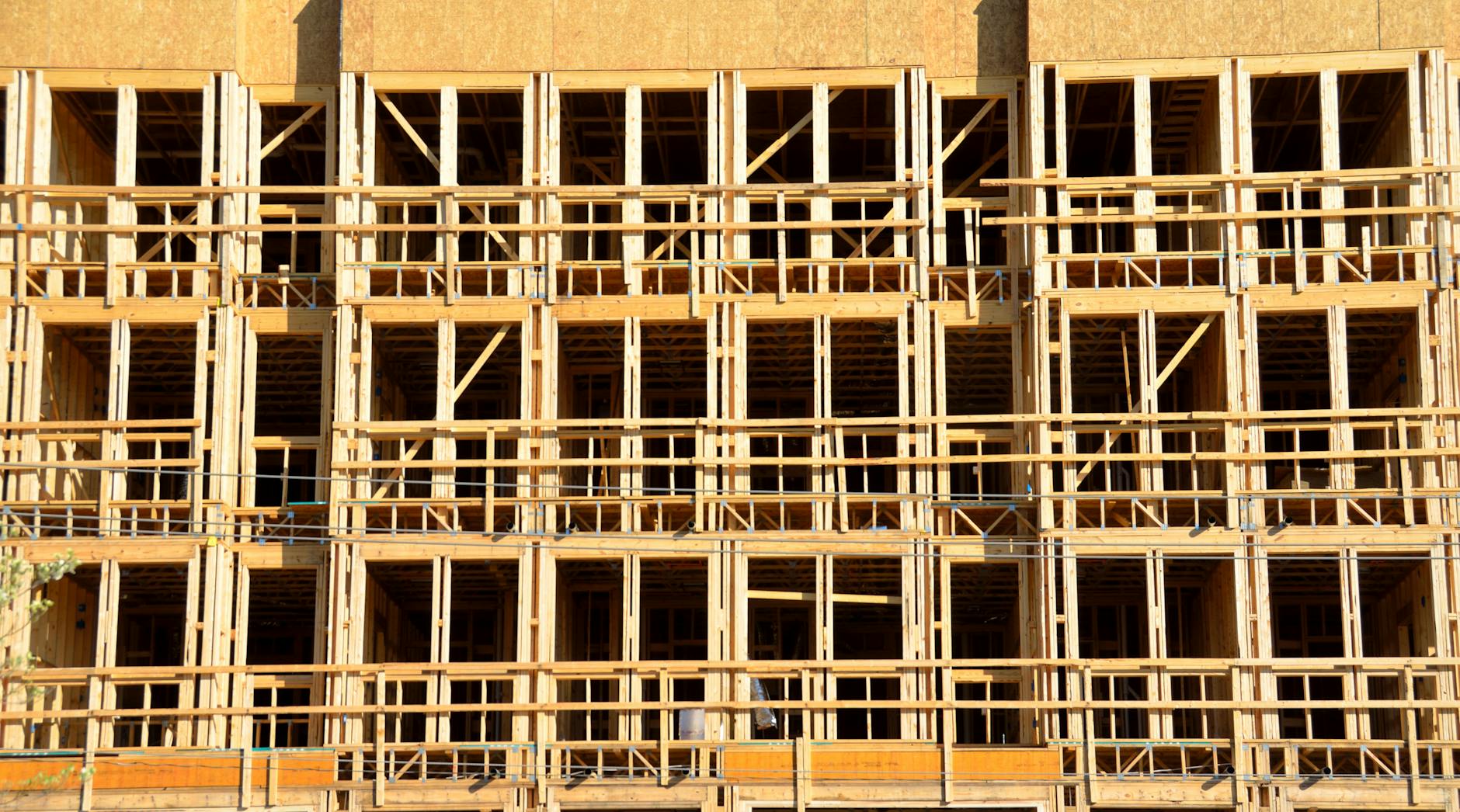
Photo by [Pixabay](https://www.pexels.com/photo/beige-wooden-railings-210695/) on Pexels
AI-generated article. Figures and regulatory references link to primary sources.
The construction sector is quietly consuming the planet’s remaining carbon budget at a pace that most sustainability professionals underestimate. The sector now drives roughly one-third of global CO₂ emissions, up from around 20% in 1995, and the materials sitting at the core of every project, cement, steel, brick, are the primary culprits. The global construction carbon footprint has doubled over the past three decades and is projected to more than double by 2050, with cement, steel and aluminium alone responsible for roughly 23% of total global emissions and most of that traced back to the built environment. For manufacturers, procurement teams, and sustainability consultants who work with construction materials, understanding and measuring the environmental impact of individual products is no longer a nice-to-have. It is the foundation of credible claims, regulatory compliance, and competitive differentiation. This guide breaks down the science, standards, and practical methodology behind construction materials sustainability, with real benchmark data to ground the conversation.
Key Takeaways
- Buildings are responsible for 39% of global energy-related carbon emissions: 28% from operational emissions and 11% from materials and construction.
- Upfront carbon, the emissions released before a built asset is used, will be responsible for half of the entire carbon footprint of new construction between now and 2050.
- Brick is a prime example of how phase-level LCA data challenges intuition: manufacturing and transport together account for nearly three-quarters of a brick’s carbon footprint, meaning efficiency gains at the kiln and in logistics have a bigger lever than raw material substitution alone.
- An Environmental Product Declaration (EPD) is based on a life cycle assessment methodology according to ISO 14040 and 14044, conducted in accordance with Product Category Rules (PCRs), and it is fast becoming the baseline disclosure expected by architects, green building certifiers, and procurement authorities.
- Sustainability teams at material manufacturers need product-level carbon data that is auditable, traceable to primary sources, and repeatable across a portfolio of SKUs, not just a one-off study.
Why Construction Materials Are the Embodied Carbon Problem
There is a structural asymmetry in how the construction industry has historically approached emissions. For decades, the focus fell on operational carbon: the energy used to heat, cool, and power buildings over their working lives. Efficiency standards, insulation requirements, and renewable energy procurement steadily reduced that share. The unintended consequence is that embodied carbon is locked in as soon as a project is built, which is why early design and procurement decisions are critical.
The share of embodied carbon from materials is projected to surge from 25% to nearly half (49%) by mid-century, and Architecture 2030 estimates that upfront carbon will be responsible for half of the entire carbon footprint of new construction between now and 2050. This means that by 2050, the carbon story of a new building will be written almost entirely by its bill of materials, not its energy tariff. For material manufacturers, this is both a risk and an opportunity. The risk is that procurement specifications increasingly require verified low-carbon credentials. The opportunity is that companies with credible, product-level data can win specifications that competitors without data cannot even bid for.
Under a business-as-usual scenario, the construction carbon footprint alone will exceed the per-annum carbon budget for the 1.5°C and 2°C goals in the next two decades, not considering other industries. That trajectory makes construction materials sustainability one of the most consequential decarbonisation levers available, and it makes product-level measurement an urgent priority rather than a long-term aspiration.
The Brick Data That Changes How You Think About Phase Breakdown
Most people assume that the raw materials extraction phase dominates construction product footprints. The Life Cycle Assessment: The Complete Guide (2026) explains why this assumption routinely misleads procurement decisions, and brick is an instructive case.
According to Devera’s ISO 14040/44 benchmark data, a single kilogram of brick carries a median footprint of 0.98 kg CO₂e, with a range of 0.70–1.21 kg CO₂e. On its own that number is useful. What is revealing is the phase split: manufacturing accounts for 47.8% of the total impact, transport for 26.2%, and raw materials for just 21.7%. Put differently, the kiln and the logistics chain together are responsible for roughly three-quarters of a brick’s lifecycle footprint.
This has concrete implications for procurement and product design. A specification that simply prioritises “natural” raw material origins, without interrogating the firing process or supply chain geography, is optimising the wrong variable. The manufacturers who score in Devera’s A-grade bracket (below 0.80 kg CO₂e per kg) are almost certainly achieving that through kiln efficiency improvements, lower-carbon fuel mixes, or shorter distribution radii, not through raw material selection alone. For sustainability teams running supplier assessments or developing Environmental Product Declarations, phase-level breakdown data is not a reporting artefact; it is the signal that points to where intervention is worth investing.
It is also worth noting the wide variance in the benchmark range. A brick from the top of the range (1.21 kg CO₂e) carries more than 70% more embodied carbon than one from the bottom (0.70 kg CO₂e). Across a mid-rise residential project using hundreds of tonnes of brick, that gap accumulates to tens of thousands of kilograms of CO₂e. Procurement decisions made without product-level data are, in effect, decisions made blindly within that variance.
Low-Carbon Alternatives: What LCA Reveals
Brick and concrete are not the only options. Mass timber technologies such as cross-laminated timber (CLT) and glue-laminated beams are helping architects and builders rethink mid-rise and even high-rise construction. Unlike steel and concrete, which emit carbon during production, sustainably harvested timber captures and stores CO₂ as it grows, locking it into building structures for decades.
Peer-reviewed comparative LCAs of mass timber versus steel and concrete structures show embodied carbon reductions ranging from 22% to 50% across building types, with the spread driven by sourcing region, end-of-life assumptions and the share of structural timber in the building envelope. The carbon sequestration effect means that timber can act as a net carbon store within a building’s structure, a benefit that only emerges when the full lifecycle is assessed using a methodology like ISO 14040/44. A cradle-to-gate calculation that stops at factory gate would miss this dimension entirely.
For cement, supplementary cementitious materials (SCMs) such as ground granulated blast-furnace slag and calcined clay are increasingly available. LC3 (Limestone Calcined Clay Cement) can reduce clinker content by up to 50% and cut cement emissions by 30 to 40% using widely available raw materials. These alternatives represent a practical route to embodied carbon reduction at scale without requiring entirely new construction methods.
The common thread across all of these options is that their environmental advantage only becomes verifiable through LCA. Marketing claims about “low-carbon concrete” or “sustainable timber” require the quantification backbone of a product carbon footprint (PCF) or EPD to carry credibility with specifiers, certifiers, and regulators.
EPDs and the ISO 14040/44 Foundation
The Environmental Product Declaration has become the primary instrument through which construction material manufacturers communicate verified environmental performance. An EPD is based on a life cycle assessment methodology according to ISO 14040 and 14044, conducted in accordance with Product Category Rules (PCRs). For construction products specifically, European manufacturers must also comply with EN 15804, the sector-specific standard that defines core rules for EPDs for construction products and services, complements ISO 14025 by adding sector-specific requirements, and ensures that environmental declarations for building materials are consistent, enabling comparisons between products and supporting green building certifications such as BREEAM and LEED.
EPDs are increasingly becoming required for public procurement and in sectors like the built environment, packaging, and manufacturing. California’s Caltrans agency now requires EPD submittals for eligible materials (carbon steel rebar, structural steel, flat glass, mineral wool board insulation) on infrastructure projects with bid openings from February 2025 onwards, reflecting a broader regulatory direction. The Environmental Product Declaration: The Complete 2026 Guide covers what manufacturers need to know about the EPD process from goal definition through third-party verification.
For sustainability teams at material manufacturers, the challenge is not usually understanding what an EPD requires, it is generating the underlying LCA data at the pace and scale the market demands. A single product study following the full ISO 14040/44 process can take six to twelve weeks using traditional consulting methods. Manufacturers managing product portfolios of dozens or hundreds of SKUs face a scalability problem that manual approaches cannot solve.
The Sustainable Manufacturing: A Complete 2026 Guide explores how automation is changing this equation across manufacturing sectors, not only construction.
Compliance Angles: CSRD, EU Green Claims, and Procurement Rules
Regulatory pressure on construction materials sustainability is intensifying from multiple directions simultaneously. The table below summarises the standards and frameworks a material manufacturer needs to keep on their radar today.
| Standard / framework | Scope | What it asks of construction material manufacturers |
|---|---|---|
| ISO 14040 / 14044 | LCA methodology backbone | Goal & scope, inventory, impact assessment, interpretation phases |
| ISO 14025 | Type III environmental declarations | Third-party verified EPDs developed under consistent PCRs |
| EN 15804+A2 (mandatory since Oct 2022) | Core PCR for construction product EPDs in Europe | 13 environmental impact indicators including a biogenic / fossil carbon split |
| EU CSRD | Corporate sustainability disclosure | Real estate and supply-chain Scope 1-3 emissions, materials impact, renovation strategy |
| EU Green Claims Directive | Substantiation of environmental claims | LCA-backed evidence for any “low-carbon”, “sustainable” or “carbon neutral” claim |
| Buy Clean California Act / Caltrans EPD | US public infrastructure procurement | EPDs required for carbon steel rebar, structural steel, flat glass, mineral wool (bid openings from Feb 2025) |
| LEED v4 / v4.1 (MR credits) | US green building certification | Product-specific EPDs grant Building Product Disclosure and Optimisation credits |
| BREEAM (Mat 01 / Mat 02) | UK/EU green building certification | Verified EPDs reward materials credits in project specifications |
Under the EU’s Corporate Sustainability Reporting Directive (CSRD), the real estate sector must report comprehensively on building energy performance, construction materials’ environmental impact, and long-term renovation strategies aligned with EU climate goals. Material manufacturers feeding into those supply chains will face increasing data requests from their downstream customers who are themselves in scope for CSRD disclosure.
The EU’s Green Claims Directive tightens the requirements for any environmental claim made about a product, including claims like “low-carbon”, “sustainable”, or “carbon neutral”. Under this framework, such claims must be substantiated by a Life Cycle Assessment that follows ISO 14040/44 methodology. Material manufacturers who currently rely on narrative sustainability communication without quantified product data face genuine legal exposure as this directive takes effect.
Green building rating systems add a third layer of demand. EPDs can contribute to higher scores in sustainability certifications like LEED and BREEAM, which are both widely recognised green building certification systems. Specifying architects increasingly use EPD availability as a filter during product selection, which means the absence of an EPD can eliminate a product from consideration entirely, regardless of its actual environmental performance.
For the specific whole-life carbon calculation timeline under the recast EPBD and the revised Construction Products Regulation, including the 2028 and 2030 disclosure thresholds, see Devera’s dedicated breakdown in Embodied Carbon in Buildings: A Complete 2026 Guide.
How to Approach Product-Level Carbon Measurement for Construction Materials
For sustainability and LCA teams working in the construction materials space, a rigorous product carbon footprint calculation requires several components working together.
The first is a clearly defined functional unit and system boundary. For a brick, the functional unit is typically one kilogram (or one unit) delivered to the factory gate (cradle to gate) or to a building site (cradle to practical completion). The choice of system boundary determines what lifecycle phases are captured and must align with the applicable PCR for the product category.
The second is primary activity data from the manufacturing process: energy consumption per tonne of output, fuel type, kiln temperatures and efficiency, raw material compositions, packaging, and waste. The further this data is from generic industry averages and the closer it is to actual plant-level measurements, the more differentiated and defensible the resulting PCF will be.
The third is a structured uncertainty assessment. The Devera brick benchmark (0.98 kg CO₂e median, range 0.70–1.21 kg CO₂e) reflects the real spread of outcomes across manufacturers using probabilistic LCA methods. A single-point estimate without a stated uncertainty range is difficult to verify and will increasingly be scrutinised under third-party EPD verification and audit processes.
The stool benchmark provides a useful cross-sector contrast: a single stool carries a median footprint of 21.57 kg CO₂e, with a range spanning from 8.34 to 44.83 kg CO₂e, where raw materials account for 52.7% of the impact. The five-fold spread in that range illustrates exactly why category-level averages are inadequate for procurement decisions, and why verified, product-specific data matters. The same logic applies, with even greater force, to structural construction materials where quantities per project run to tonnes, not units.
Frequently Asked Questions
What does “construction materials sustainability” mean in an LCA context? In an LCA context, construction materials sustainability refers to the quantified environmental performance of a material across its full lifecycle, from raw material extraction through manufacturing, transport, use in a building, and end-of-life. It is not a qualitative label but a set of measurable indicators, the most commercially significant of which is the global warming potential expressed in kg CO₂e per functional unit, as reported in an Environmental Product Declaration or product carbon footprint study.
Why does the manufacturing phase dominate brick’s carbon footprint more than raw material extraction? Brick production requires high-temperature kiln firing, typically between 900°C and 1200°C, which demands large amounts of thermal energy. Devera’s ISO 14040/44 benchmark data shows manufacturing at 47.8% of total impact versus raw materials at just 21.7%, which means the combustion process during firing is a far larger driver of emissions than clay extraction. This phase breakdown directs decarbonisation investment toward kiln fuel switching, efficiency upgrades, and waste heat recovery rather than raw material substitution.
How are EPDs used in green building certifications like LEED and BREEAM? EPDs provide the verified, third-party-reviewed environmental data that certification schemes use to award materials credits. Under LEED’s Building Product Disclosure and Optimisation credits, product-specific EPDs conforming to ISO 14044 and the applicable PCR contribute toward materials transparency points. BREEAM’s Mat 01 and Mat 02 credits similarly reward projects where specified products carry verified EPDs, giving material manufacturers with published EPDs a tangible competitive advantage in project specifications.
What is the difference between embodied carbon and operational carbon for construction materials? Embodied carbon covers all greenhouse gas emissions associated with producing, transporting, assembling, maintaining, and disposing of a building’s materials over its full lifecycle. Operational carbon covers emissions from energy used to run the building once it is occupied, heating, cooling, lighting, and equipment. While operational carbon has historically dominated the sector’s total impact, improvements in building energy efficiency and renewable energy uptake are steadily closing that gap. By mid-century, embodied carbon from materials is projected to account for nearly half of new construction’s total lifecycle footprint, making upfront material choices the dominant sustainability lever available to designers and specifiers.
Ready to move from a single product calculation to a portfolio-level view of your materials’ footprint? For sustainability teams who need defensible, auditable numbers tied to actual bill-of-materials data, Devera maps your product inputs to verified emission factors from Ecoinvent and DEFRA and delivers ISO 14040/44-compliant outputs ready for EPD workflows or CSRD supplier data requests. See how Devera handles construction material carbon footprints or explore pricing for your portfolio size.